A Tale Told by an Idiot:
The Sound and Fury and the Pursuit of Community through Depressing Movies
Editorial by Soraya Sebghati

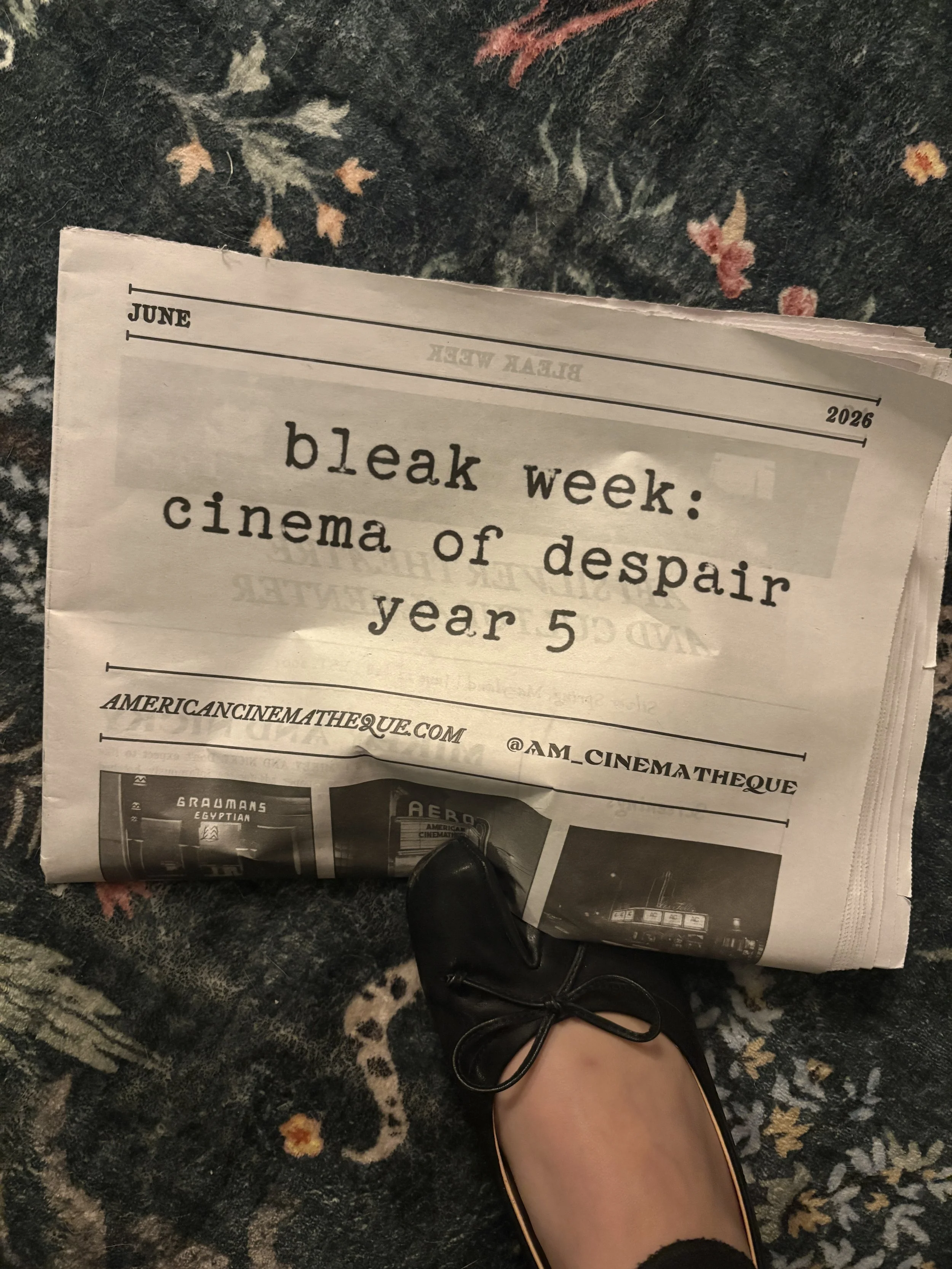
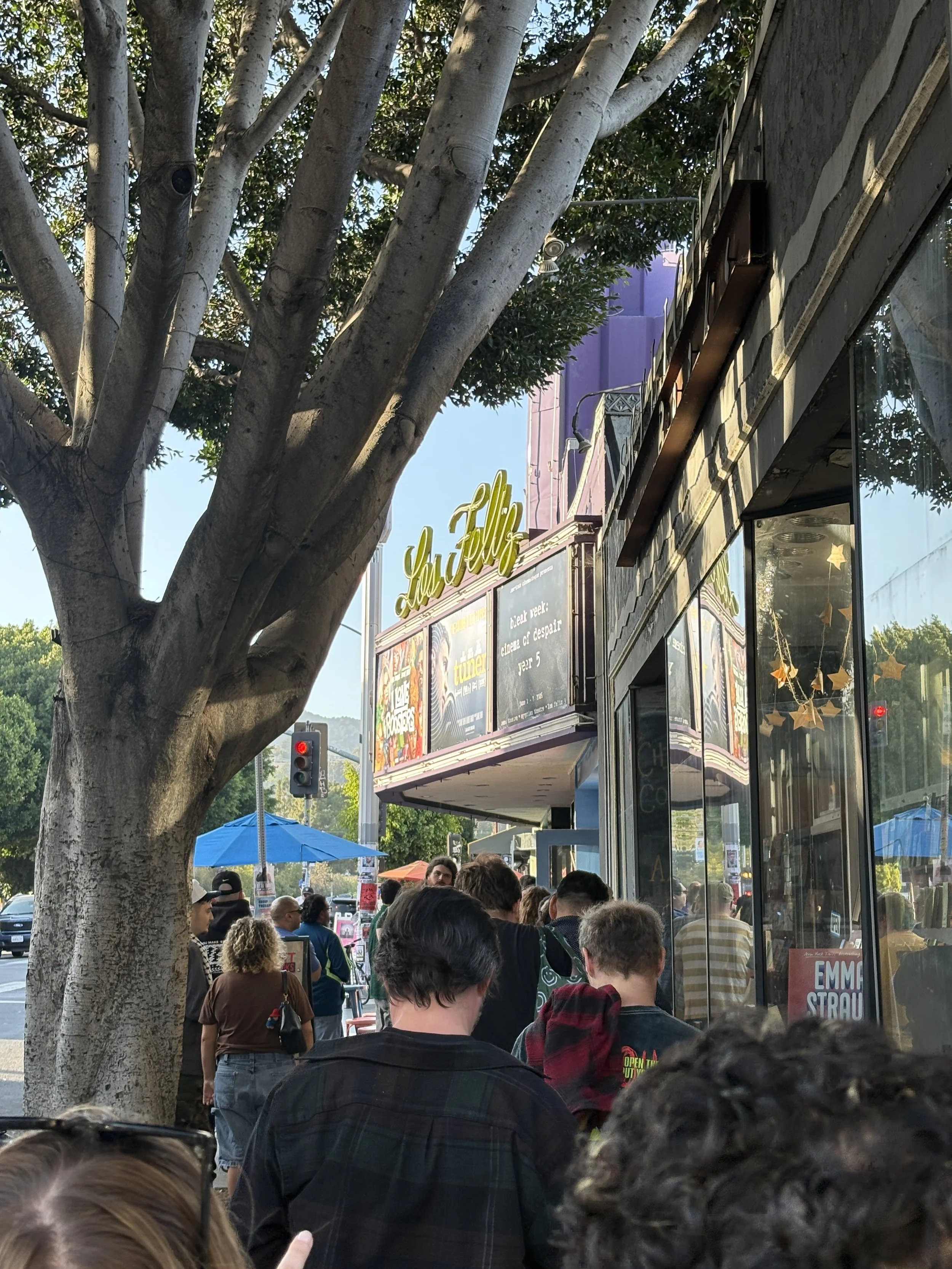
My favorite thing about watching a bunch of seemingly random movies in rapid succession is finding the connective tissue. “Internal thematic reverberations,” as one of my professors used to call them. How are these distinct, separate pieces of art in conversation with each other? It was time to find out with this year’s programming at the American Cinematheque’s annual Bleak Week: Cinema of Despair film festival. Beyond the depressing and sometimes depraved subject matter, the varied slate at the festival had more things in common than meets the eye, often in the most unexpected ways.
Bleak Week started in 2021 as a way to offer counterprogramming to all the hopeful things people were clinging to as the restrictions of the COVID-19 pandemic began to ease up. And boy, did they strike gold with this concept. The week-long film festival has grown to over 73 cities worldwide in the five years since it began, with filmmakers flying in from all over the world to give film introductions, do Q&As and bask in the bleakness themselves. The screenings all sell out fairly quickly too; each ticket drop prompting the “bleak freaks” to create strategic game plans so as not to miss out on any prized screenings.
This year’s lineup was announced in clusters, with one email each morning alerting newsletter subscribers to what was going on sale later that day. I’d text two of my friends, Justin and Mark, to see which tickets they were prioritizing from that drop and vice versa. Then a few hours later we’d check in and see how we did.
Justin and Mark (or honestly, I), some could say, are the typical “film bros” one would expect to find at a Bleak Week screening. A lot of people complain about “film bro culture,”–a subset of (mostly) men who seem to set out to make you feel bad about not having seen ANYTHING while simultaneously not having taste more adventurous than Chris Nolan, Akira Kurosawa and David Fincher– but I’ve also met some of my favorite people by going to repertory screenings, connecting on Letterboxd and even by finding each other on the corner of social media dubbed “film Twitter.” These are the kind of people who will save you a seat if they beat you to the theater, introduce you to their other friends and stand outside the theater with you at 12:10 a.m. after the late show let out to discuss what the hell you just watched. It’s a really beautiful community to be a part of, even if sometimes you do see a guy saving a picture of boobs to his phone in the row in front of you. But hey, that guy deserves a seat in the theater too. The film bros we all love to hate are the backbone of this entire industry, and honestly, if you have a conversation with one of them, you’ll realize they’re not that at all. Under the awkward, faux-arrogant exterior is a person who just wants to geek out about what they love. I’ve done a full 180 in recent years and now like to ask the critics, “Are the film bros you speak of in the room with us right now?” Bleak Week is a great place to connect with my beloved film bros from around the city. This is my special subset of bro, the kinds of people who like to get together for a collectively uncomfortable experience. To witness some of the worst behavior or the most cosmic tragedies the world has on offer. To sit through it all, together, surviving it.
The concept of Bleak Week–and why swaths of people fill theaters across the world to experience abject sadness and heartbreak–is something your normal coworkers will probably be confused by (if you have a regular person job), and that’s nothing against them. Some people find comfort in the Paddington movies (shown every year post-Bleak Week as a palate cleanser, actually), whereas some people, including myself, find comfort in watching other people’s discomfort. We are legion, as the ticket sales prove. If you want to hear more of my thoughts on voyeurism and disturbing media, you can find them here.
THE STATS:
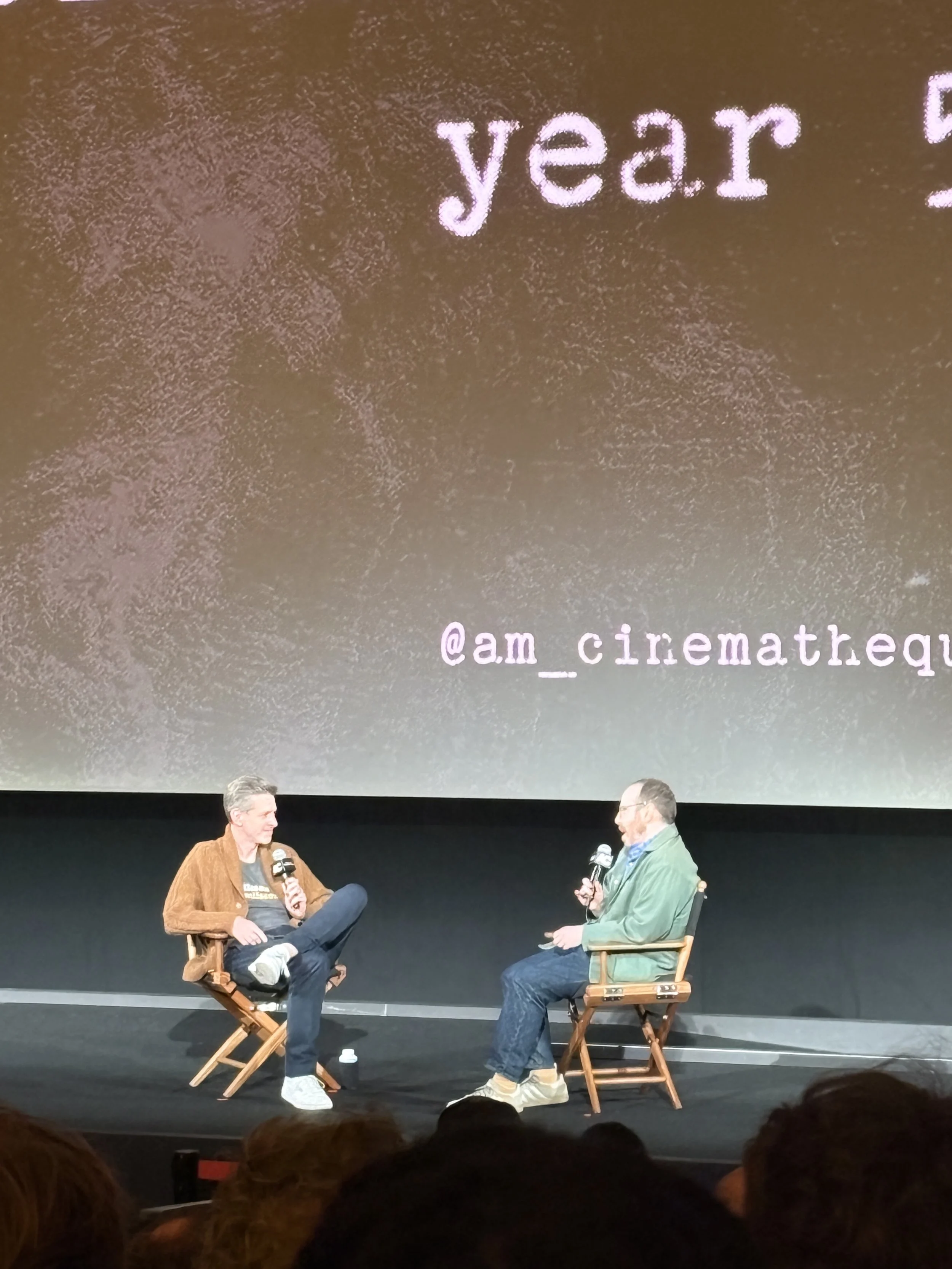
This Bleak Week, I attended nine screenings over the course of seven days, at all three locations. I had seven bags of popcorn and seven Diet Cokes. The longest movie I saw was 219 minutes (intermission included); the shortest was 94 minutes. Here is the schedule:
Day One (June 1st):
Los Feliz Theatre, 7 p.m.: Dead Presidents (dir. The Hughes Brothers), 35mm archival print courtesy of Disney.
Q&A with Allen Hughes.
Los Feliz Theatre, 10 p.m.: Spider (dir. David Cronenberg), 4K restoration.
Introduction by Brandon Wilson.
Day Two (June 2nd):
Los Feliz Theatre, 10 p.m.: The Piano (dir. Jane Campion), 4K restoration.
Introduction by Courtney Howard.
Day Three (June 3rd):
The Aero, 7:30 p.m.: Elle (dir. Paul Verhoeven).
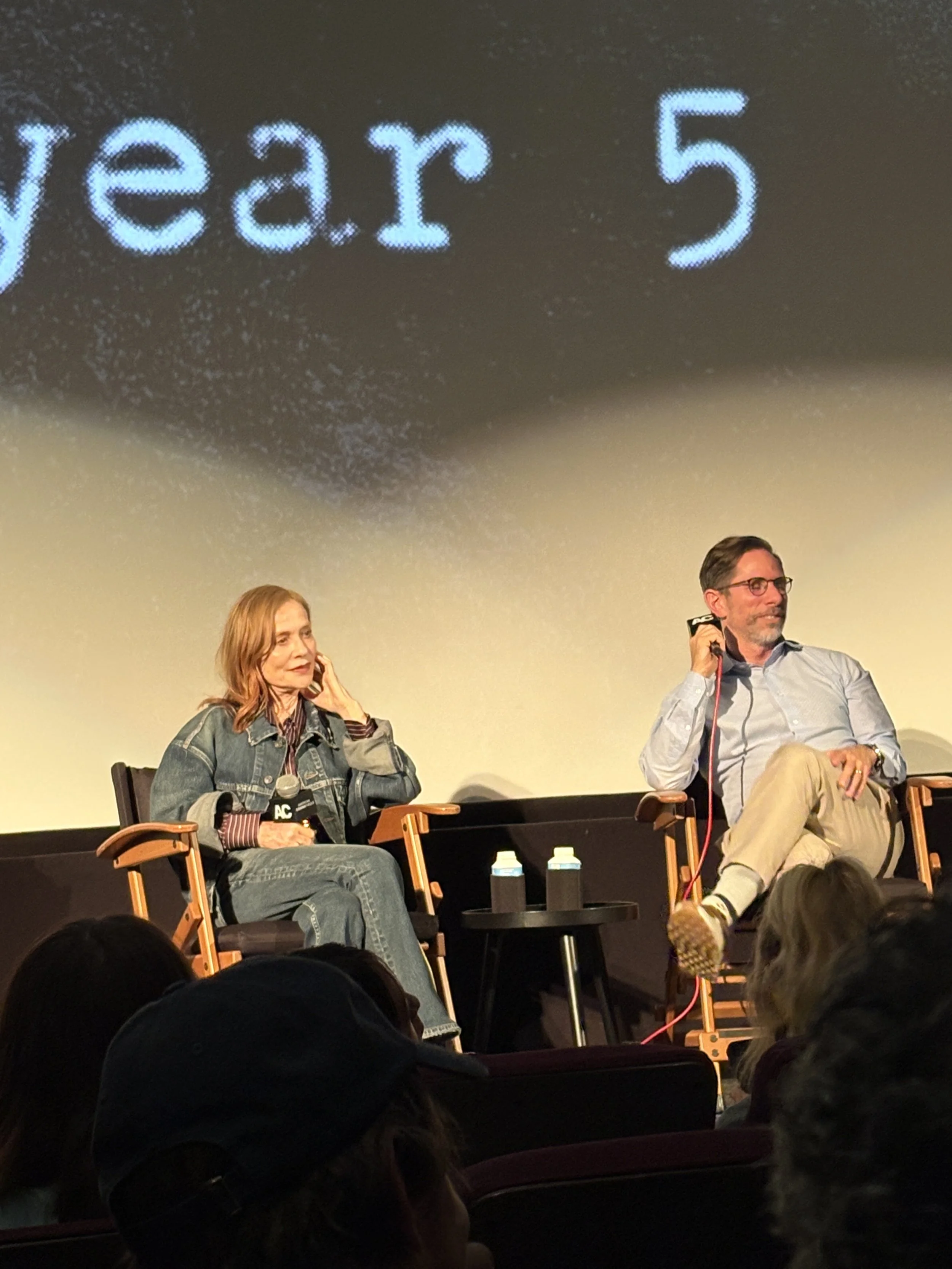
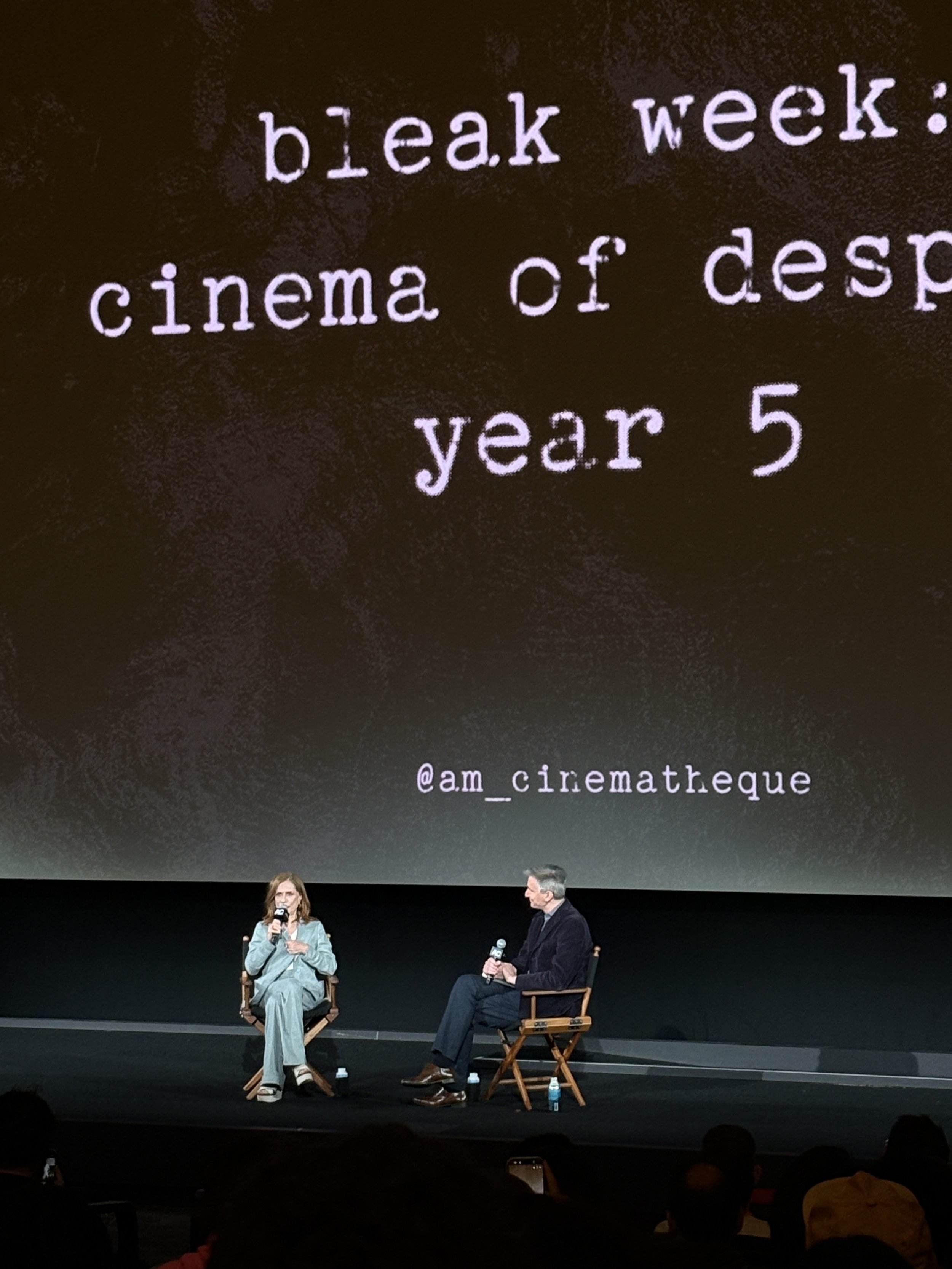
Q&A with Isabelle Huppert.
Day Four (June 4th):
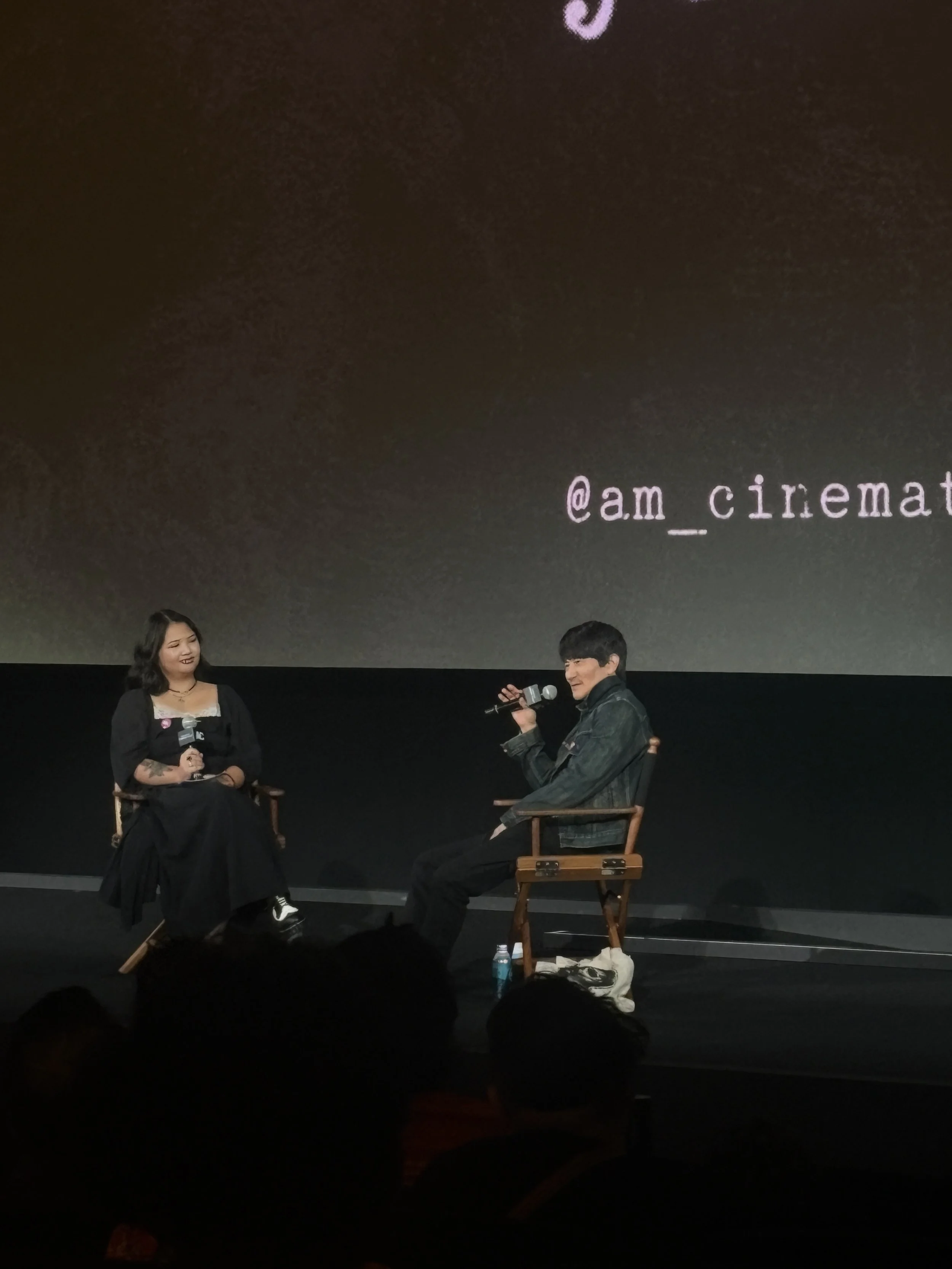
The Egyptian Theatre, 7 p.m.: Mysterious Skin (dir. Gregg Araki), 4K restoration.
Q&A with Gregg Araki.
Day Five (June 5th):
The Egyptian Theatre, 7 p.m.: Heaven’s Gate (dir. Michael Cimino), 35mm, extended cut.
Q&A with Isabelle Huppert.
Day 6 (June 6th):
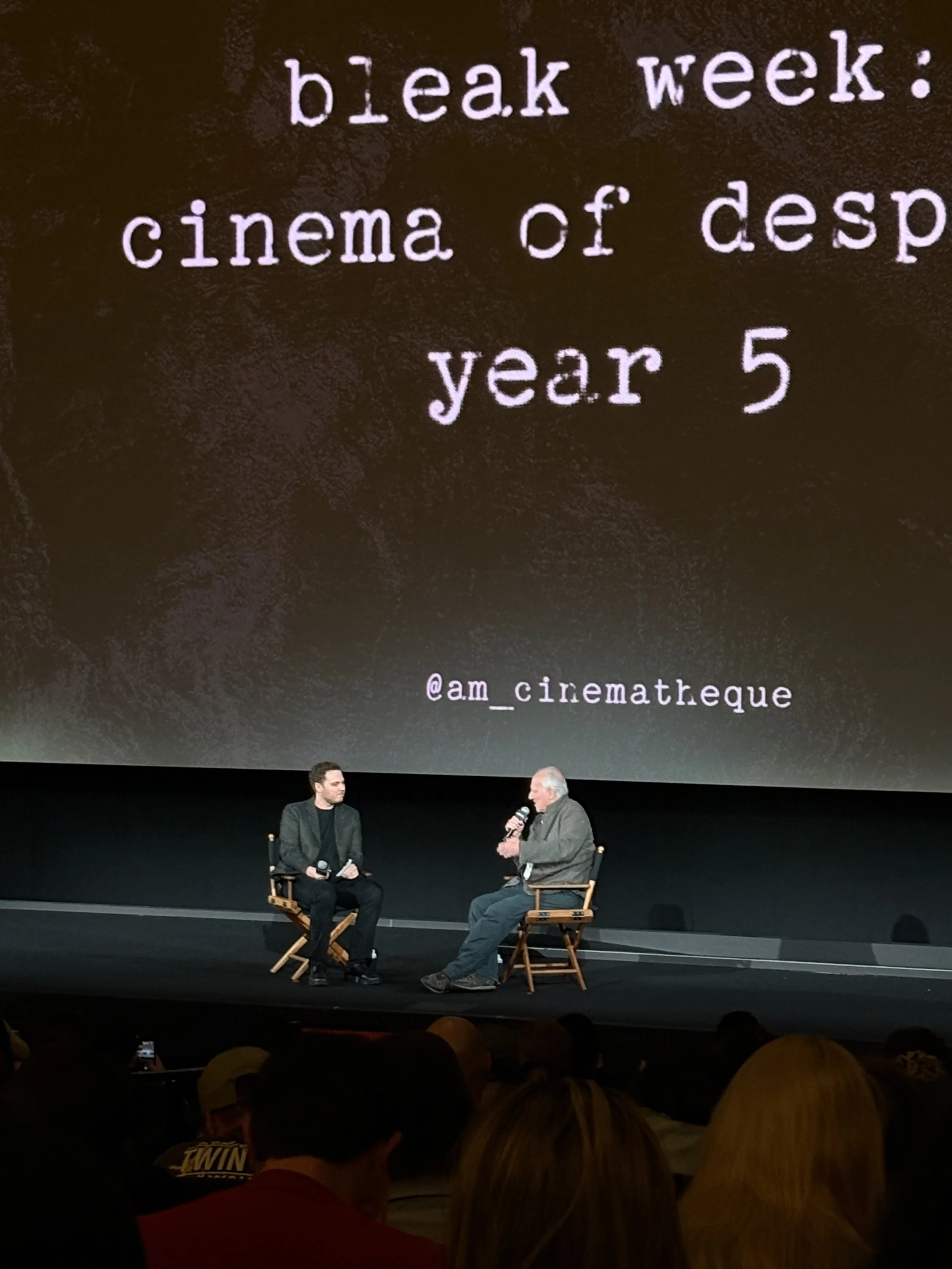
The Egyptian Theatre, 7:30 p.m.: Heart of Glass (dir. Werner Herzog).
Q&A with Werner Herzog.
Day 7 (June 7th):
The Egyptian Theatre, 3:30 p.m.: Hereditary (dir. Ari Aster).
Q&A with Ari Aster.
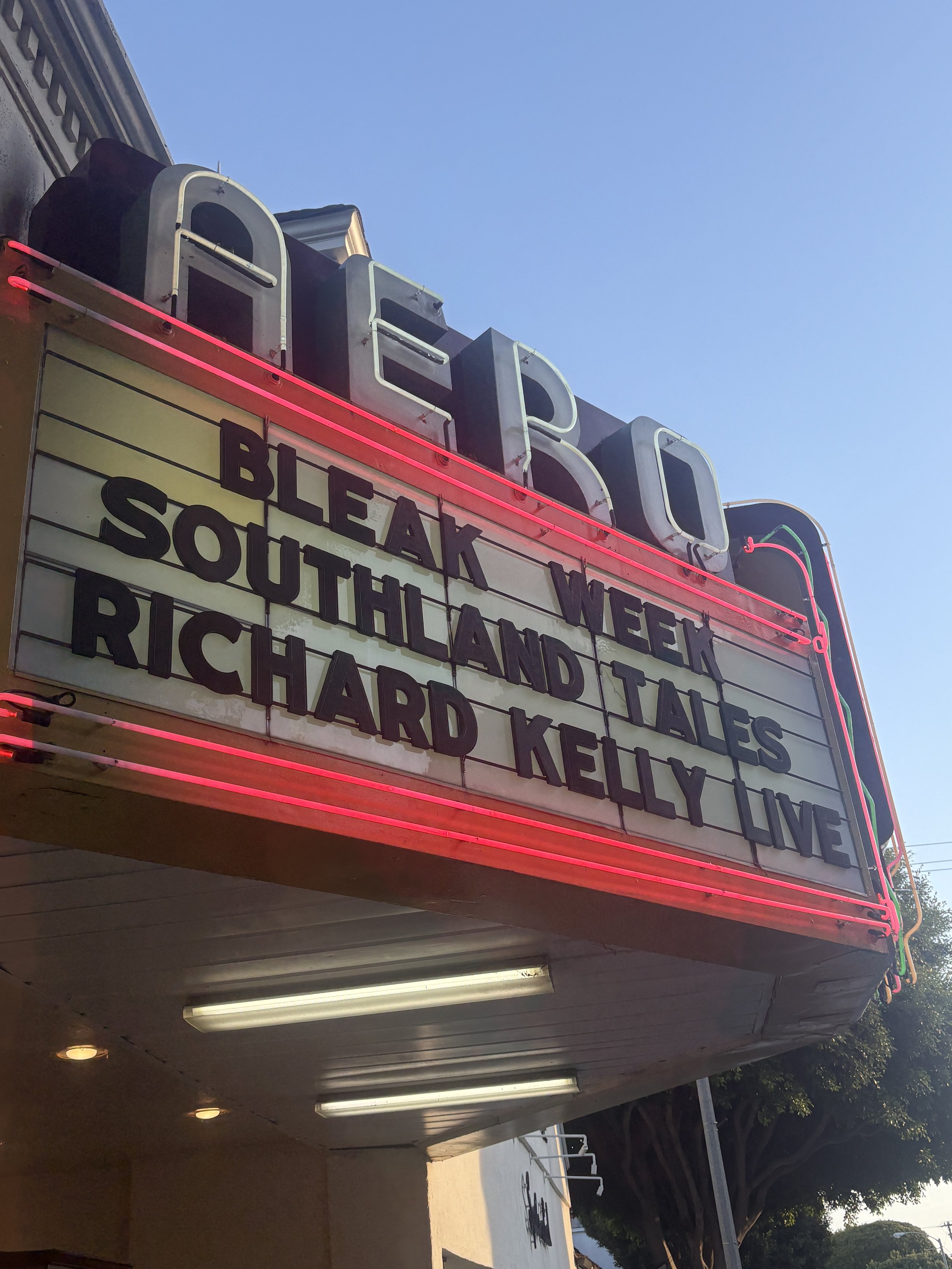
The Aero, 7:30 p.m.: Southland Tales (dir. Richard Kelly), the Cannes Cut.
Q&A with Richard Kelly.
When I see it all laid out like this, I really do see a seemingly disparate slate of films. The definition of “bleak” stretches and contorts to fit different genres and moods. The programming allows it to push the boundaries and allow for metatextual readings of bleakness, including critical reception, tone and whether the film had repeated takes of difficult scenes. Perhaps the definition also accounts for the unexplainable creeping feeling that lingers, inducing a sobbing fit on your car ride home even if the movie has a happy ending.
I saw two Gabriel Byrne movies and two Miranda Richardson movies, and there’s one movie in the center of that venn diagram: Spider. It’s certainly an off-the-beaten-path entry for director David Cronenberg: it was received well by critics, but it’s certainly not a popcorn movie. A 10 p.m. screening was a tough sit, but a rewarding one for those of us who managed to lock in. It’s a tale told by, well, not quite an idiot (Ralph Fiennes), but a man deeply scarred by childhood trauma. Gabriel Byrne plays his father in flashback, and Miranda Richardson his mother, and also another character. Byrne plays this multifaceted father very well, plausibly performing some vile acts along with inciting pity and sadness. Miranda Richardson’s role is similarly dual-sided, but to say more would probably ruin the movie.
During Bleak Week, Byrne inhabits parallel fathers, also playing the father in Hereditary. Here his character is much more straightforward: he’s just trying to get by, and to get his family through an unimaginably tough time. He represents the two poles of fatherhood: the traumatizer and the source of refuge. Where Byrne digs into dualism, Richardson is the Trinity. In Spider she is both the nurturer and the monstrous, the Madonna and the whore. In Southland Tales she becomes a secret third thing: a cartoon-glossy wife of a right-wing politician (and yes, also a mother, though that’s secondary). What are both of these movies saying about familial trauma? Of course, on the surface, that it’s tough. It’s complex, it lasts, it spreads, it reverberates. And certainly for male children, it can be perpetuated by father figures.
In Spider, the father is seemingly the cause of familial trauma. In Hereditary, he is inadvertently the model for it. Byrne’s character tries to move through his trauma by continuing to live life and by attempting to steer the entire ship of his household. Where everyone else appears to fall apart, he tries to keep things together on the surface, medicated or not. Regardless of what he does in either role, he fails at the one thing the parental figure seeks to do: to protect his children from harm. Whether or not he realizes that he cannot do this, he still fails. As is mentioned in passing during a literature class in Hereditary, it’s all the more tragic that these figures are pawns in service of a greater design. They have no control in this life; they are helpless figures trying everything they can to avoid the inevitable. As much as I want to go deeper into Richardson’s character, I truly don’t think there’s anything worth comparing between her roles in Spider and Southland Tales. There’s more meat for her in the former than the latter, but I’d rather not ruin the movie.
Another strange pattern that I noticed was the link between rape and Christmas across the programmed films. In Paul Verhoeven’s Elle, Michele (Isabelle Huppert) is a single woman who gets raped by a stranger in her home more than once. It spans over the course of a year, which includes a very darkly funny Christmas dinner scene. Gregg Araki’s Mysterious Skin is the story of two teenage boys who both come to terms with the fact that they were raped by their baseball coach when they were younger. The film ends (there’s no way to spoil this, I promise) with one of the boys (Brady Corbet) finally understanding the full scope of what happened to him. This happens to take place on Christmas Eve; a night he was greatly looking forward to for different reasons entirely.
Two Christmas rape movies in one programming block is rather a strange coincidence. One is weirdly a dark comedy, the other a straightforward teen drama. Perhaps for many, Christmas represents the start to a strange, almost non-existent portion of the year. The days between Christmas and New Year’s Eve feel like borrowed time, like whatever you do in this period of time isn’t real, or doesn’t count. People in school, or those with non-service regular jobs, have that time off from work. It’s a liminal period. These periods are disrupted, however, by both characters (Huppert and Corbet) coming face to face with their trauma. In some ways, a liminal time and space is almost a safer way to deal with these complex realizations: it’s as if you’re sheltered from the full weight of it by being in a somewhat altered state. However, it also can crash you down all the way into the hard surface of the earth, with zero mercy. Elle represents the former, with Michele remaining perhaps too unafraid of what lurks outside her windows, whereas Mysterious Skin represents the latter, with two boys made vulnerable by their lowered guard in the holiday season.
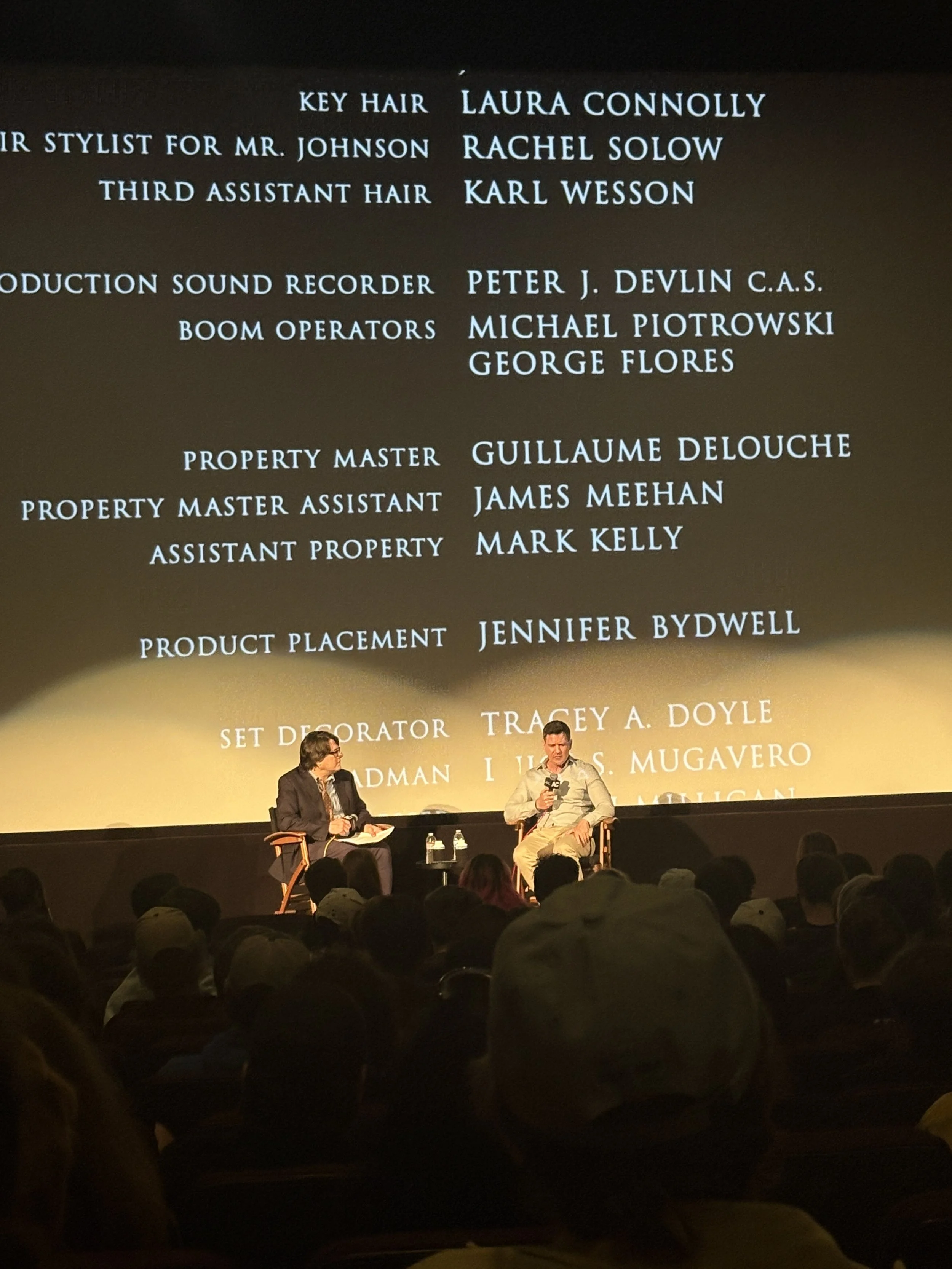
Perhaps one of the more shocking commonalities between screenings, however, was the admission by multiple directors during their Q&A’s that they wished they had done things differently with the film in question; Allen Hughes wished for some oppositional force and adversaries during the making of Dead Presidents, as he thought having some creative pushback would’ve led to a better finished product. Both Ari Aster and Richard Kelly expressed having wanted to change things about their films before they released, as well, whether it be shot composition, the tone of the dialogue or even story beats. It’s rare to see any statement of regret, let alone regret over a finished product, as I saw during the Q&A’s during Bleak Week this year. In many ways, it’s sad, thinking about how an artist could look at something he created at least 10 years ago and feel embarrassed about the finished project. However, it’s actually pretty refreshing to hear this sentiment as well. These visionary directors, these pillars of the artistic community, still have the ability to feel embarrassed about the so-called shortcomings of their work, even if nobody else feels that way.
During his Q&A, Werner Herzog mentioned how much he loathes the current Hollywood landscape and anyone who’s involved in the making of any movie being effusively positive about it. He put on his best approximation of a valley girl accent and said, mockingly, “I love it!” We’ve been taught that it’s unprofessional to point to flaws in our own work; that it’s bad to show any weakness. Deny, deny, deny! But at the end of the day, if you’re an artist, if you’re a storyteller, don’t you want to tell the truth? How constricting it is to feel forced to feign positivity about everything, a smile plastered on your face as you promote something you wish you could have spent more time on.
At first glance, these answers at the Q&A’s almost feel too vulnerable; “lie for longer,” etc. Put on a brave face and pretend that it’s hot and that you’re proud to serve it. Throw some sequins out and try to hide the blemishes that feel all too glaring. And yet, it’s this exact naked honesty that gives us all a little glint of hope, even after seeing an entire family annihilated during Hereditary, or watching a man trying to do right receive a life-long prison sentence in Dead Presidents. These are the moments that make you look at the friend sitting to your left in the theater and share a charged exhale, or a quick whisper of “Oh my god!” Hearing Richard Kelly talk about essentially getting tarred and feathered on La Croisette after the biggest premiere of his life and having to keep going on after is very upsetting, shocking and real.Listening to Allen Hughes explain that Dead Presidents isn’t as good as it could have been because the bigwigs at Disney were too scared to give any feedback is sobering, and a great lesson in the importance of having an adversary At All Times. It’s these moments that remind you that Bleak Week is about so much more than gathering around to derive entertainment from others’ suffering– it’s about finally reveling in regrets, insecurities and divine injustice with your cohort of film friends.