

Take a Walk Through the Gelliverse: the Freakshow Playground of Your Dreams
Take a Walk Through the Gelliverse: the Freakshow Playground of Your Dreams
Editorial & photography by Andrea Nayeli Candelaria
Editorial & Photography by Andrea Nayeli Candelaria
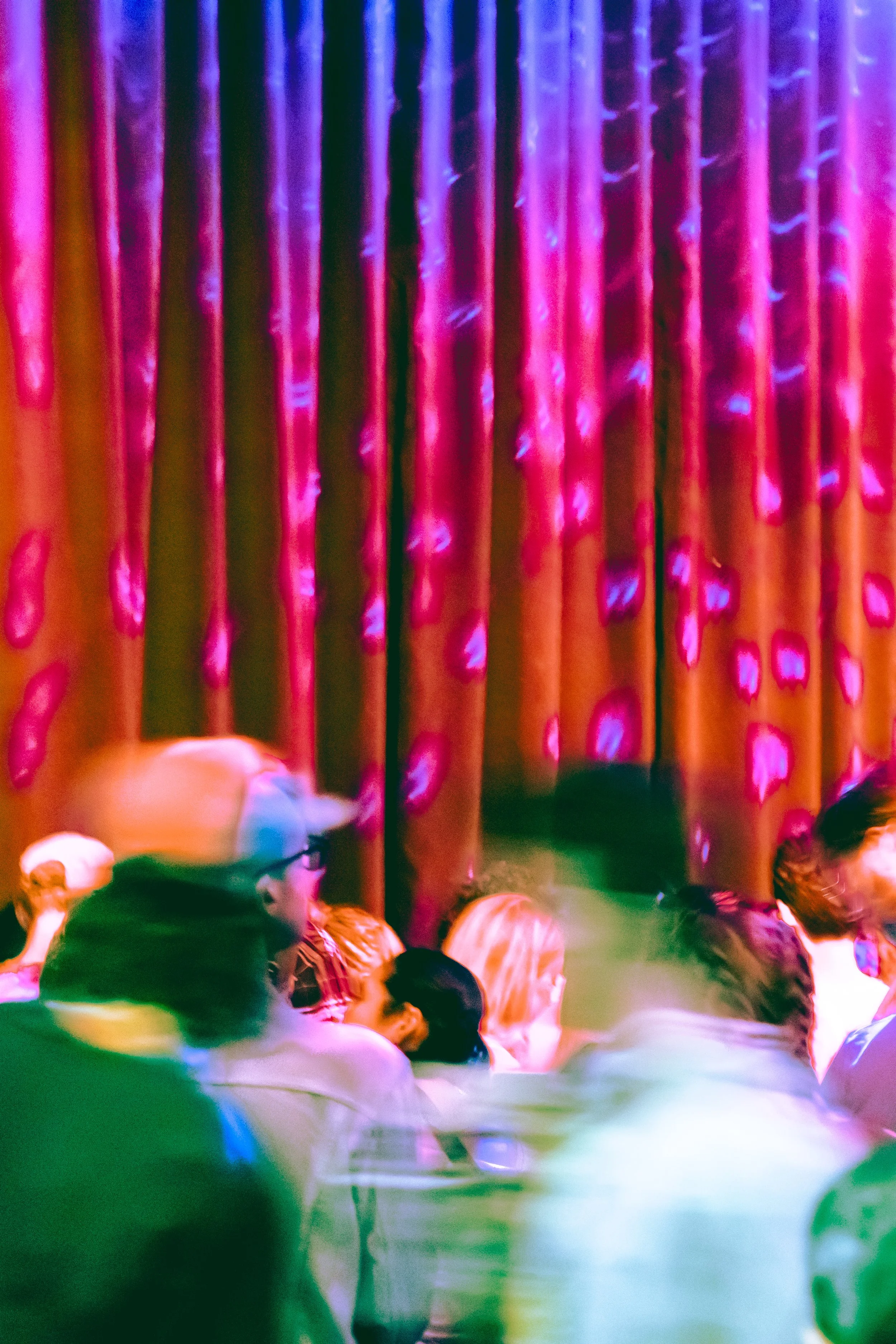
Veiled by a glowing red light, an audience of Angelenos sat cross-legged, lining the walls of Bob Baker’s Marionette Theater in Highland Park and forming a giant horseshoe around the room’s wide-open center. A sprinkling of wine glasses and potato chip cans lined the perimeters of that otherwise empty space. Above it all, a giant LED screen displayed a daunting message: “WARNING,” the memo flickered and flashed in bright green lettering, “BREACH DETECTED.”

The graphics glitched, almost glittering as the message warped over time, squeezing itself into a center axis point on the screen. As the words became increasingly illegible, something of a butterfly or an hourglass shape emerged in their place. The screen then ascended into obscurity as the crimson curtains behind it opened, revealing a recessed stage, elegantly draped in velvet.

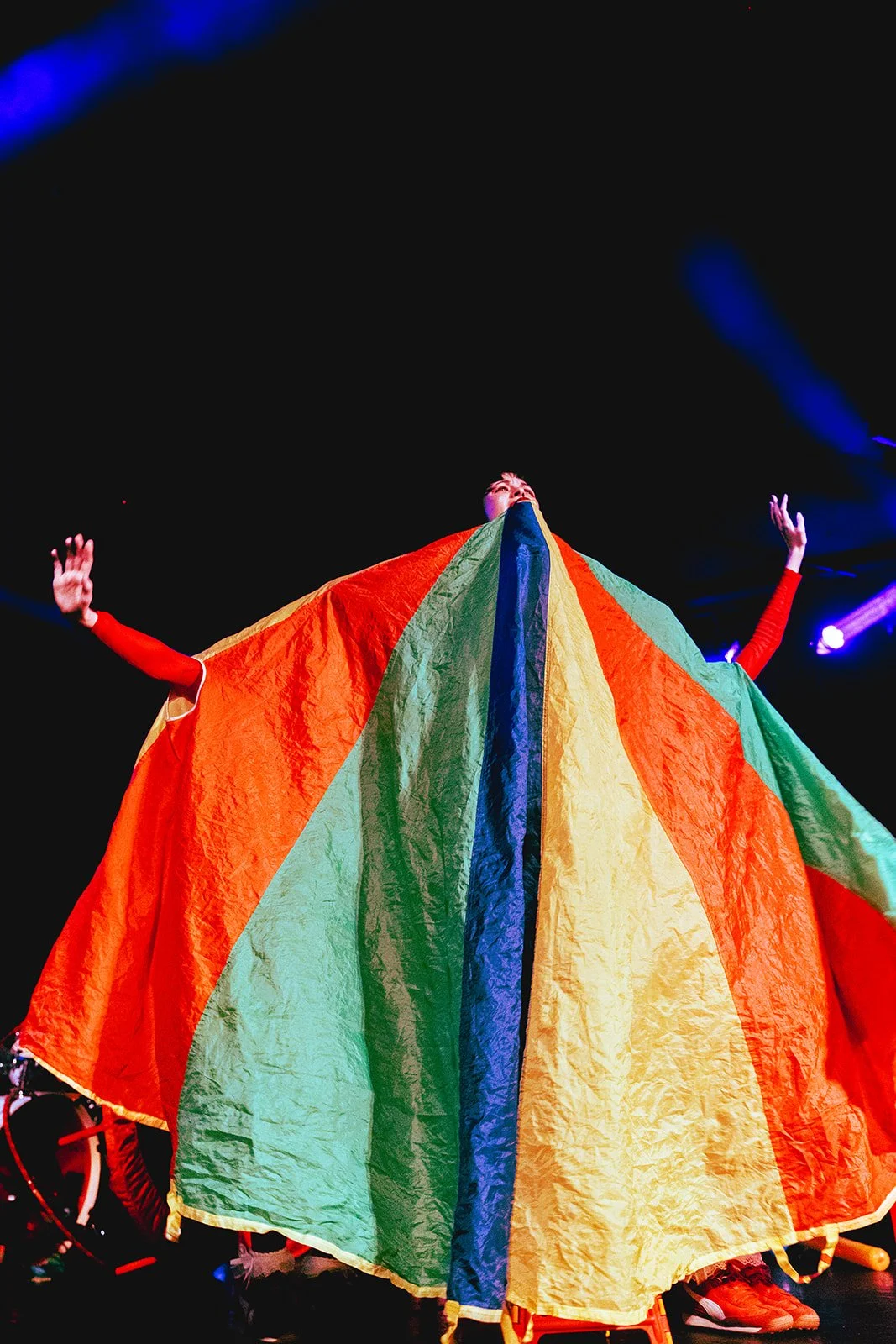
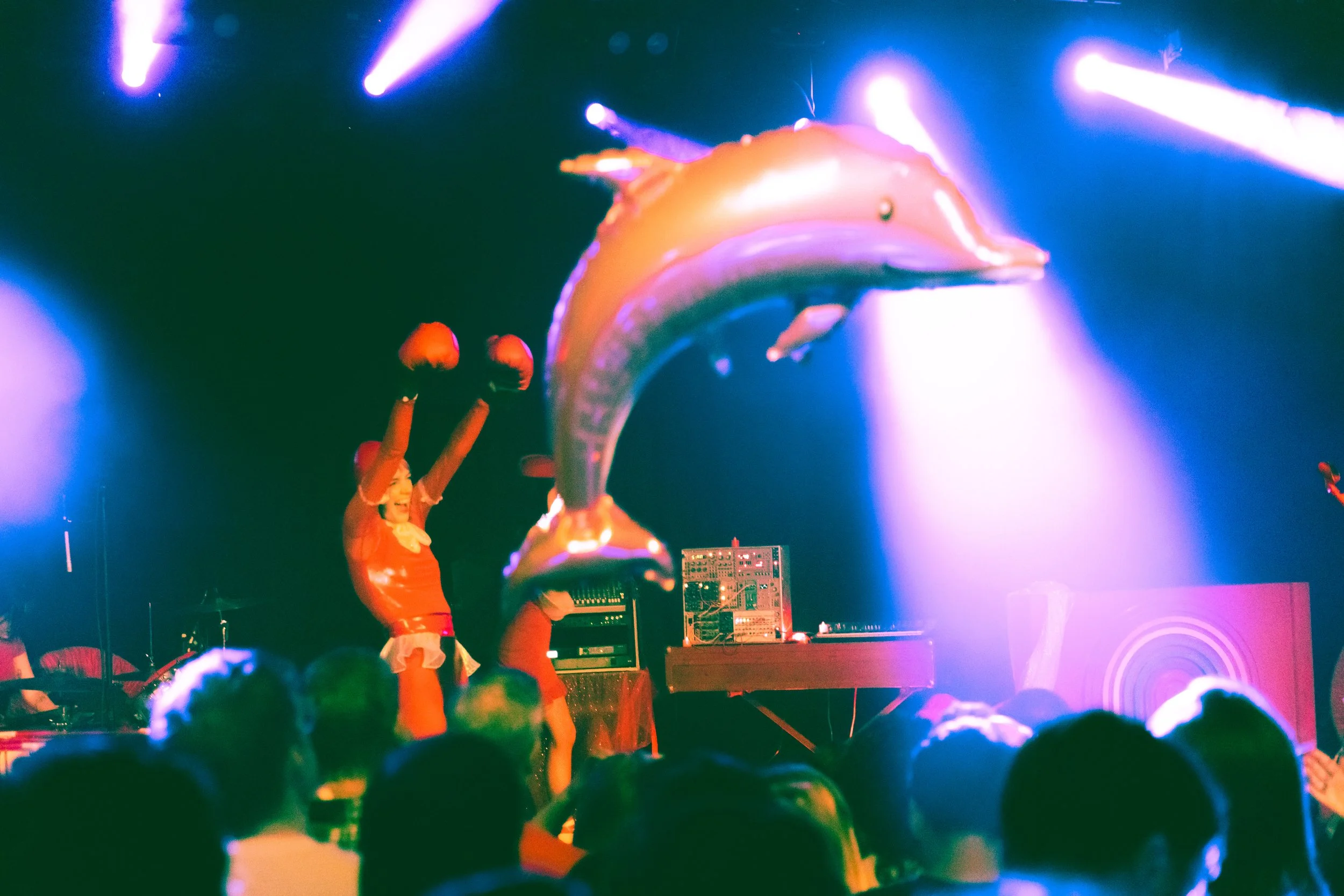
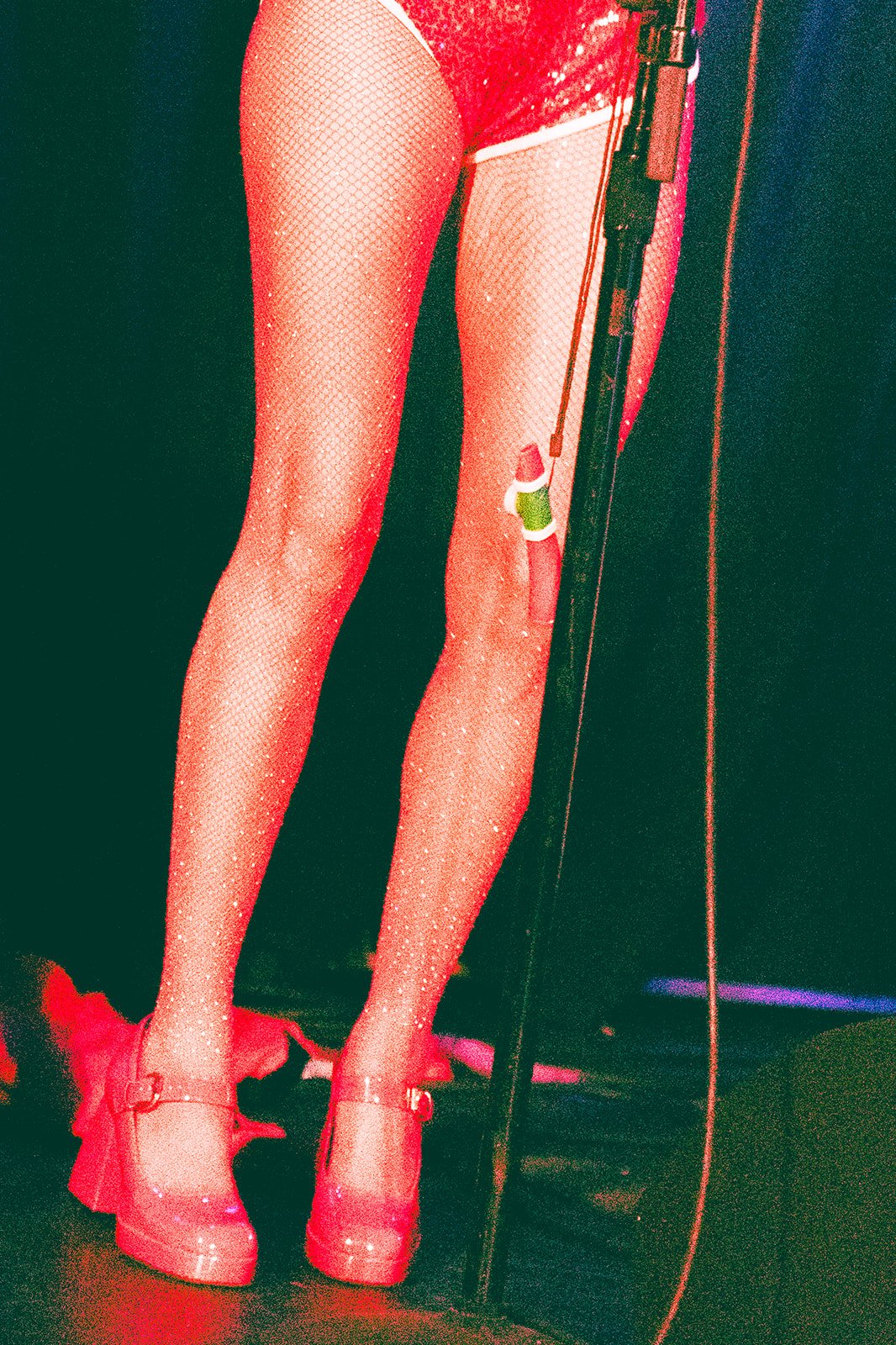
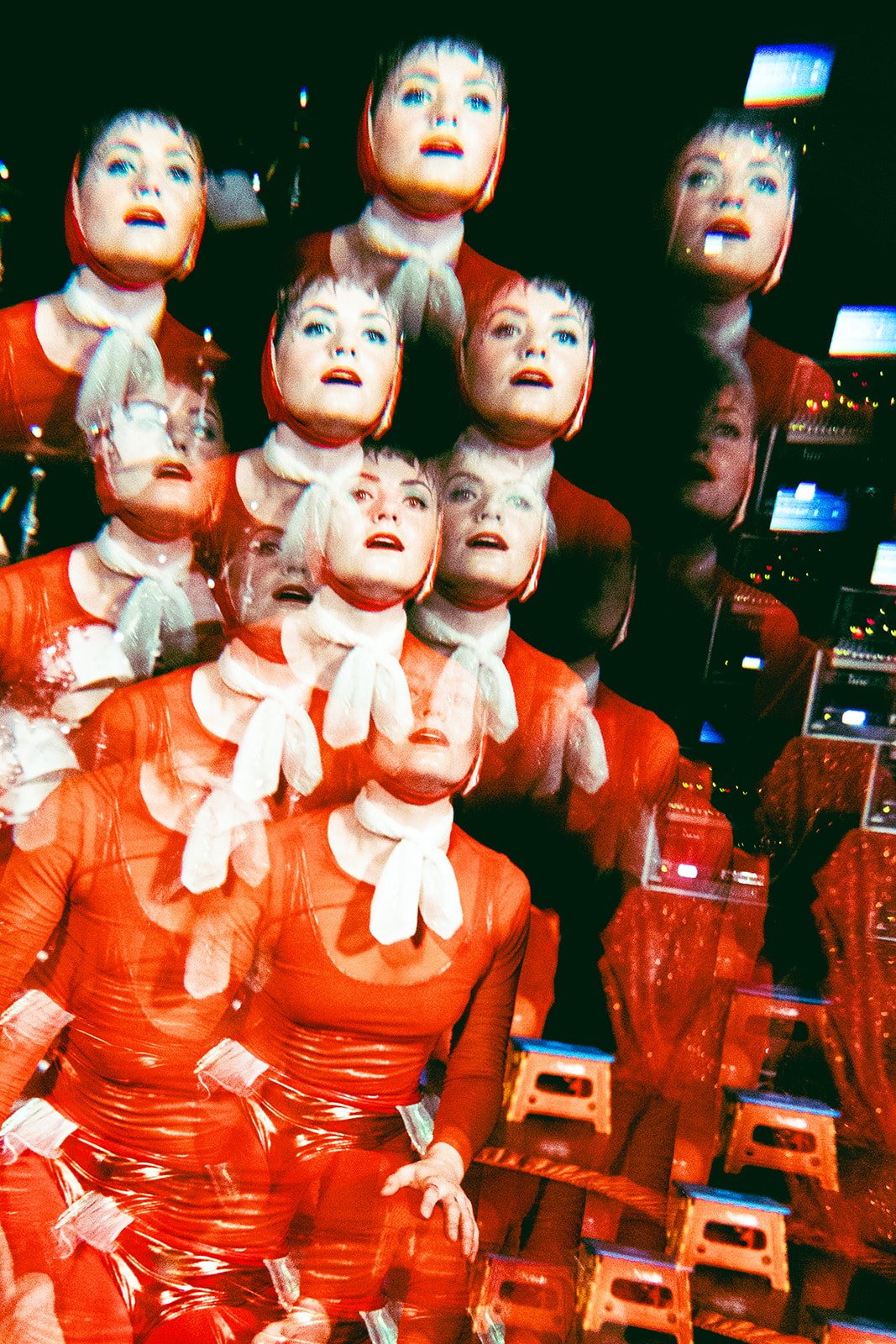
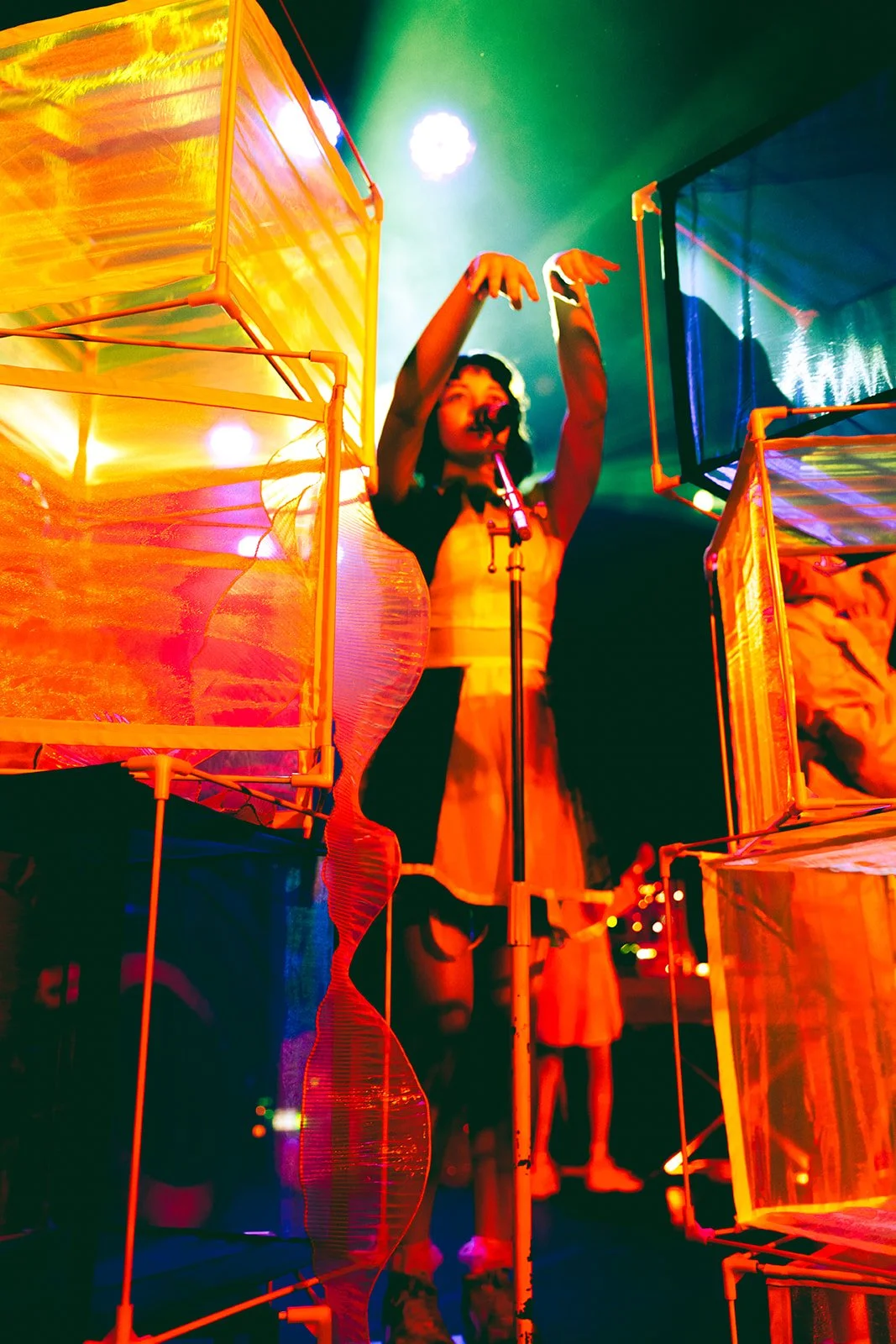
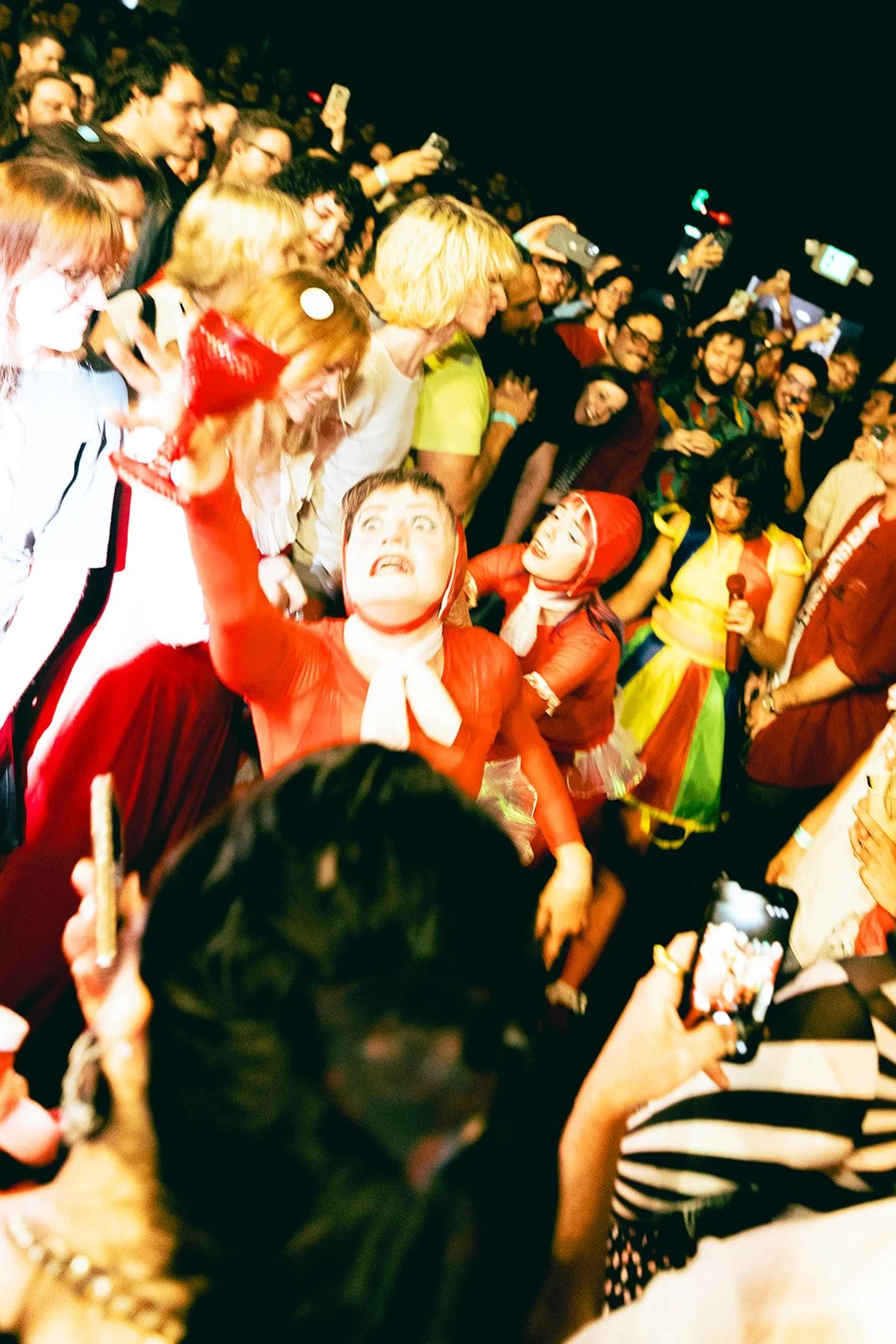
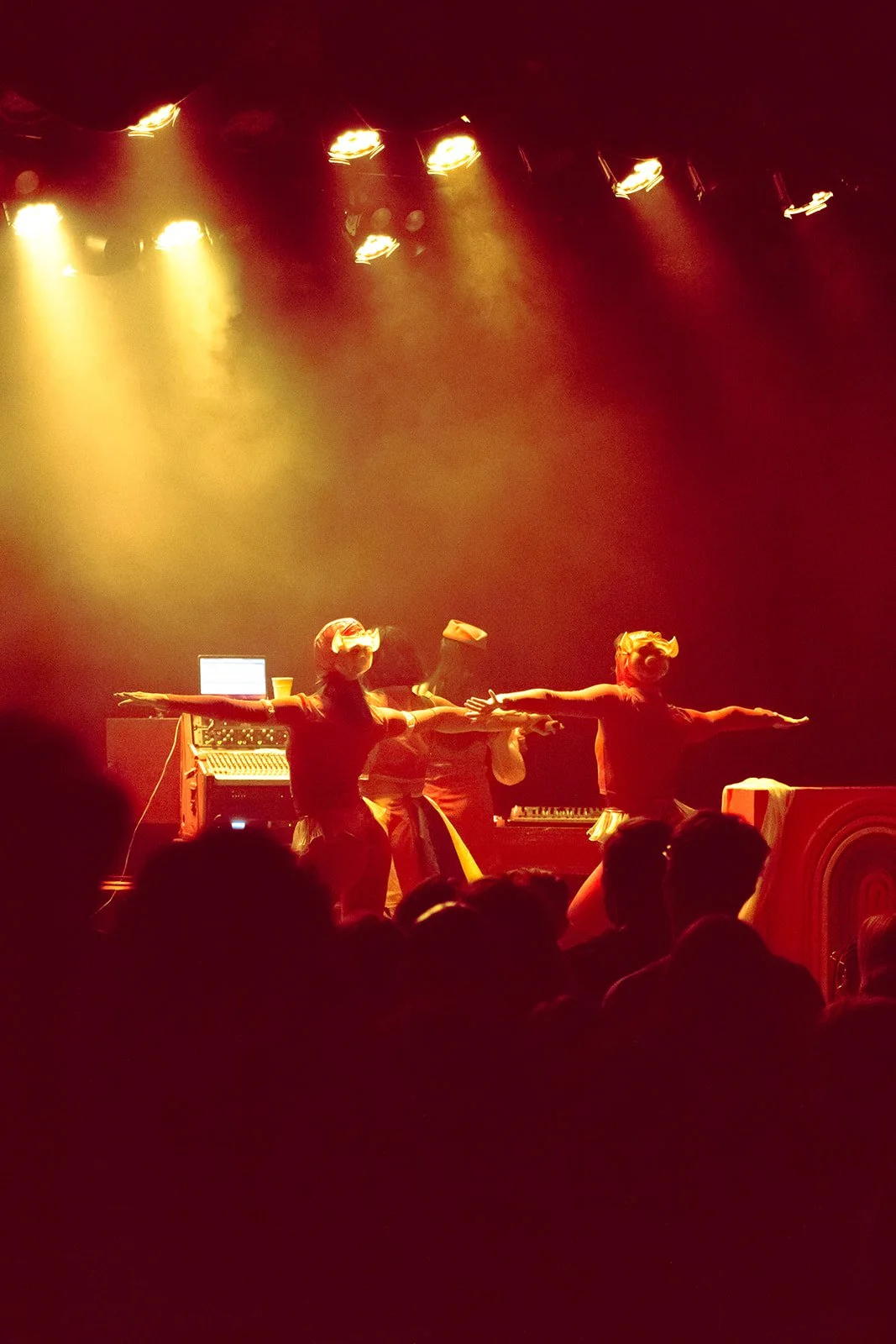
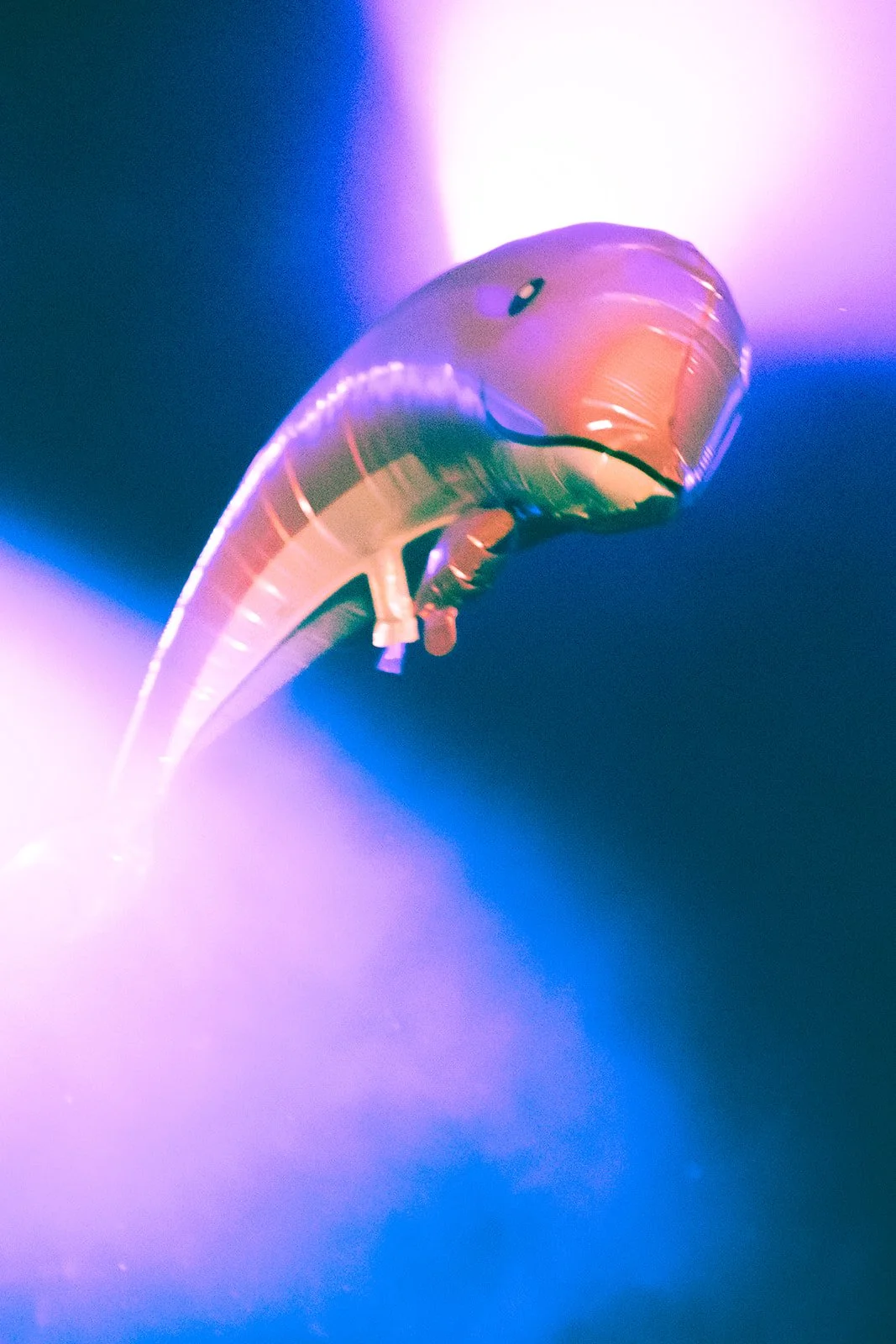
What followed was a choreographed spectacle of song, dance and theater, cleverly woven into a singular feat of modern DIY entertainment performed by the Los Angeles-based artist Gelli Haha and her creative cohorts. Adorned with puppets, parachutes, teddy bears, toy cars and candy-striped balloons, the well-rehearsed production was an ornate medley of story-rich routines, reminiscent of family-friendly Vaudeville shows that dominated the entertainment industry across regions of North America at the turn of the twentieth century. But instead of ragtime and blues, Gelli Haha performs her debut 10-track album, Switcheroo, achieving feats of inspired collaboration and creative artistry while she re-invests musical artistry from the ground up.
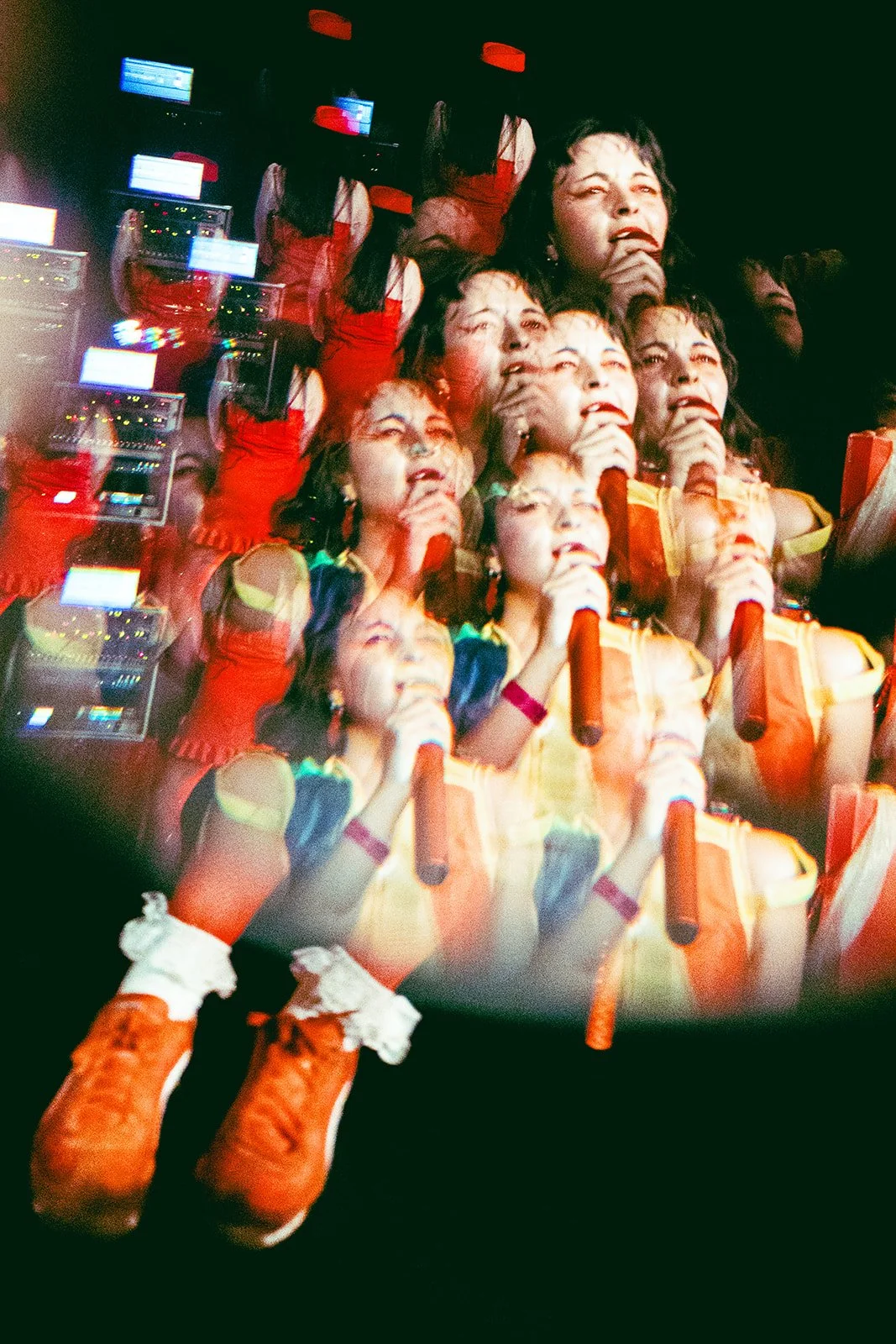
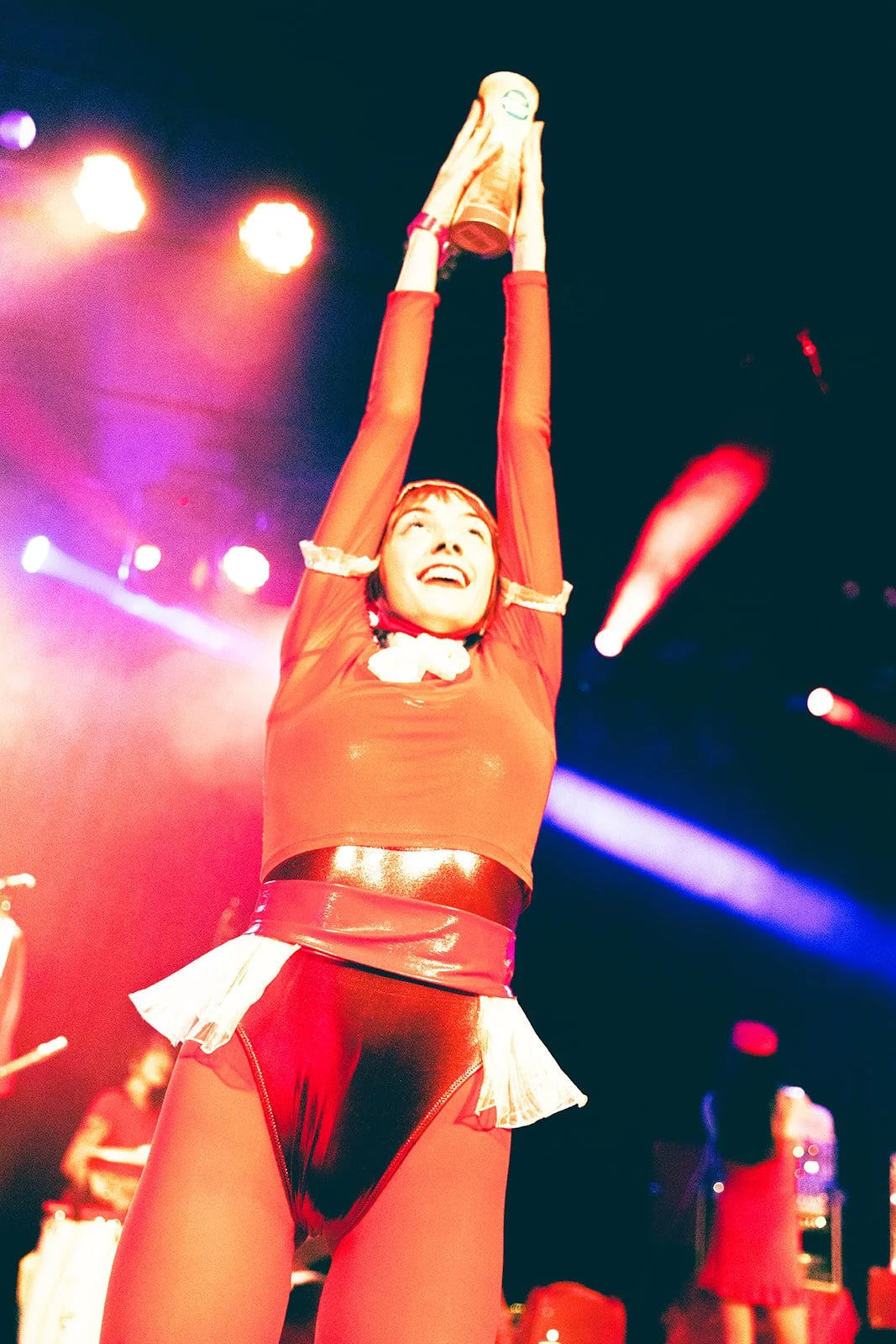
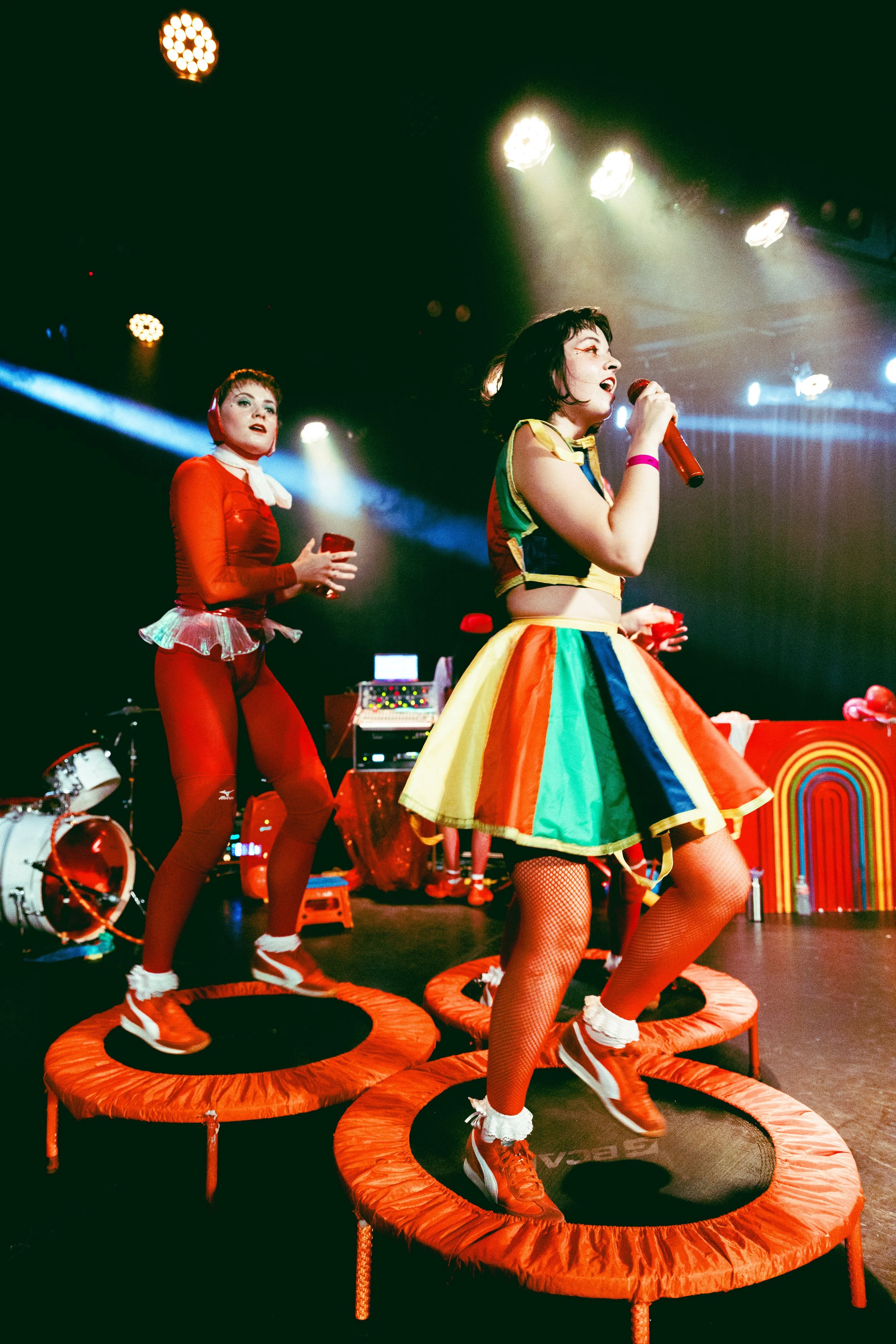
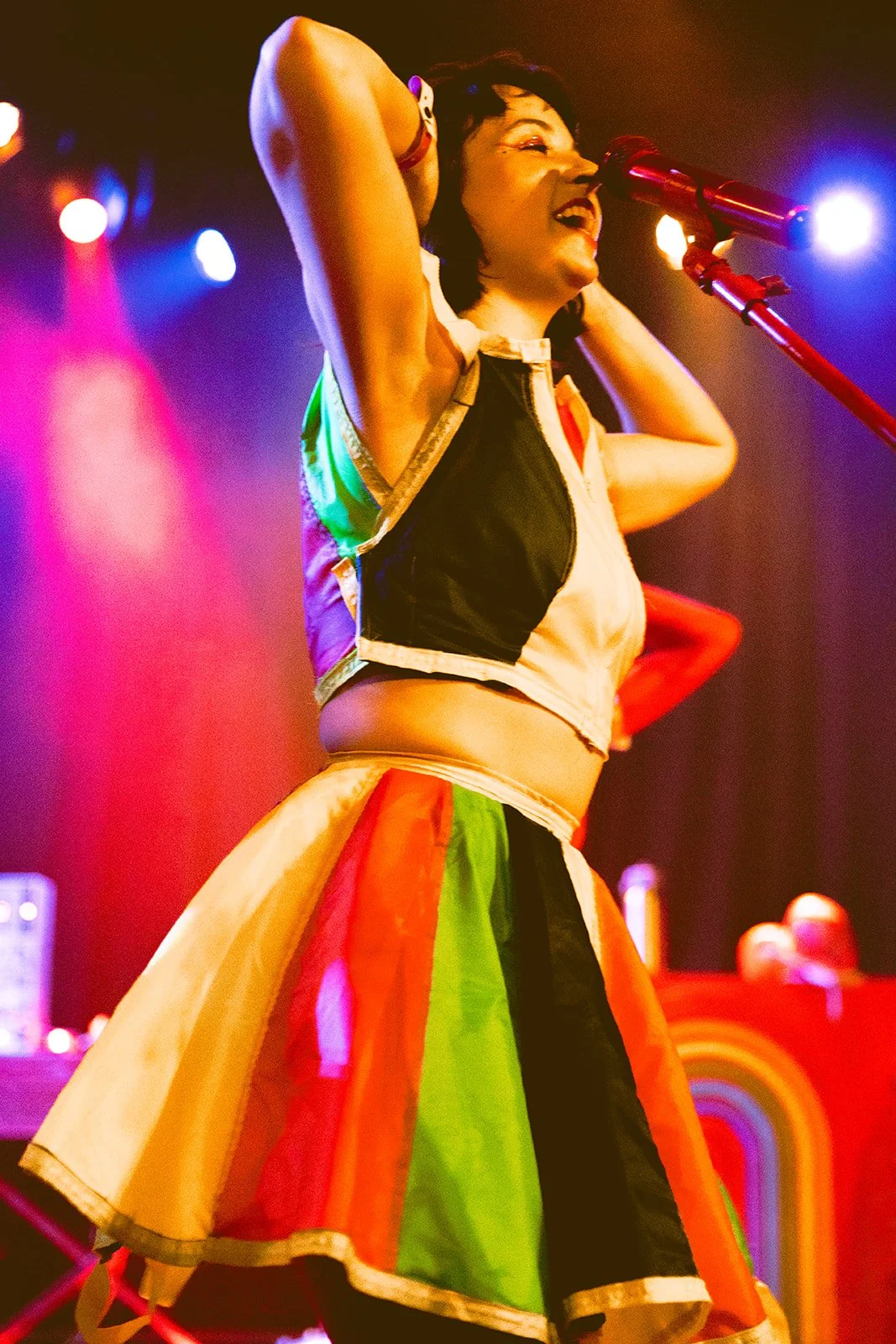
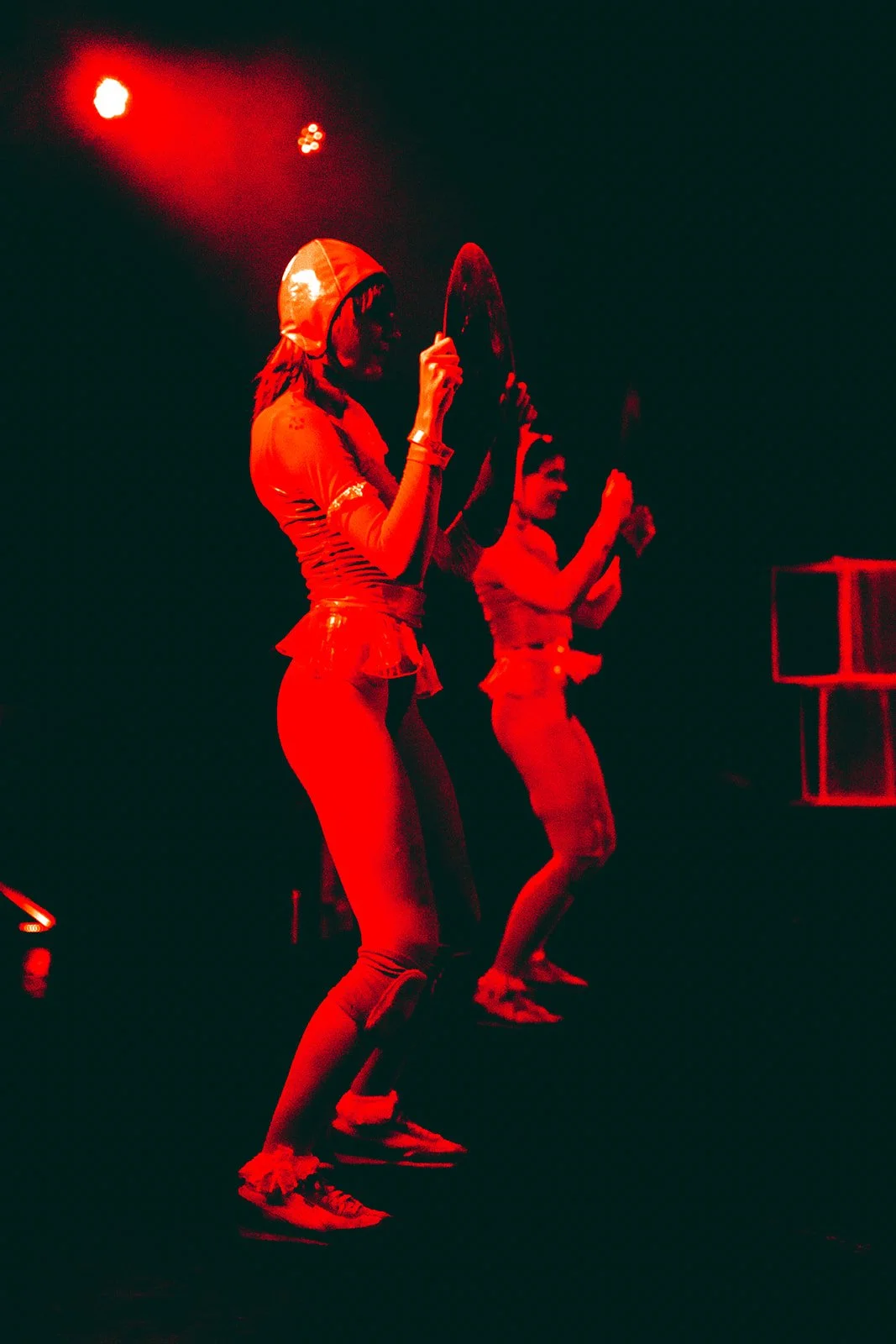
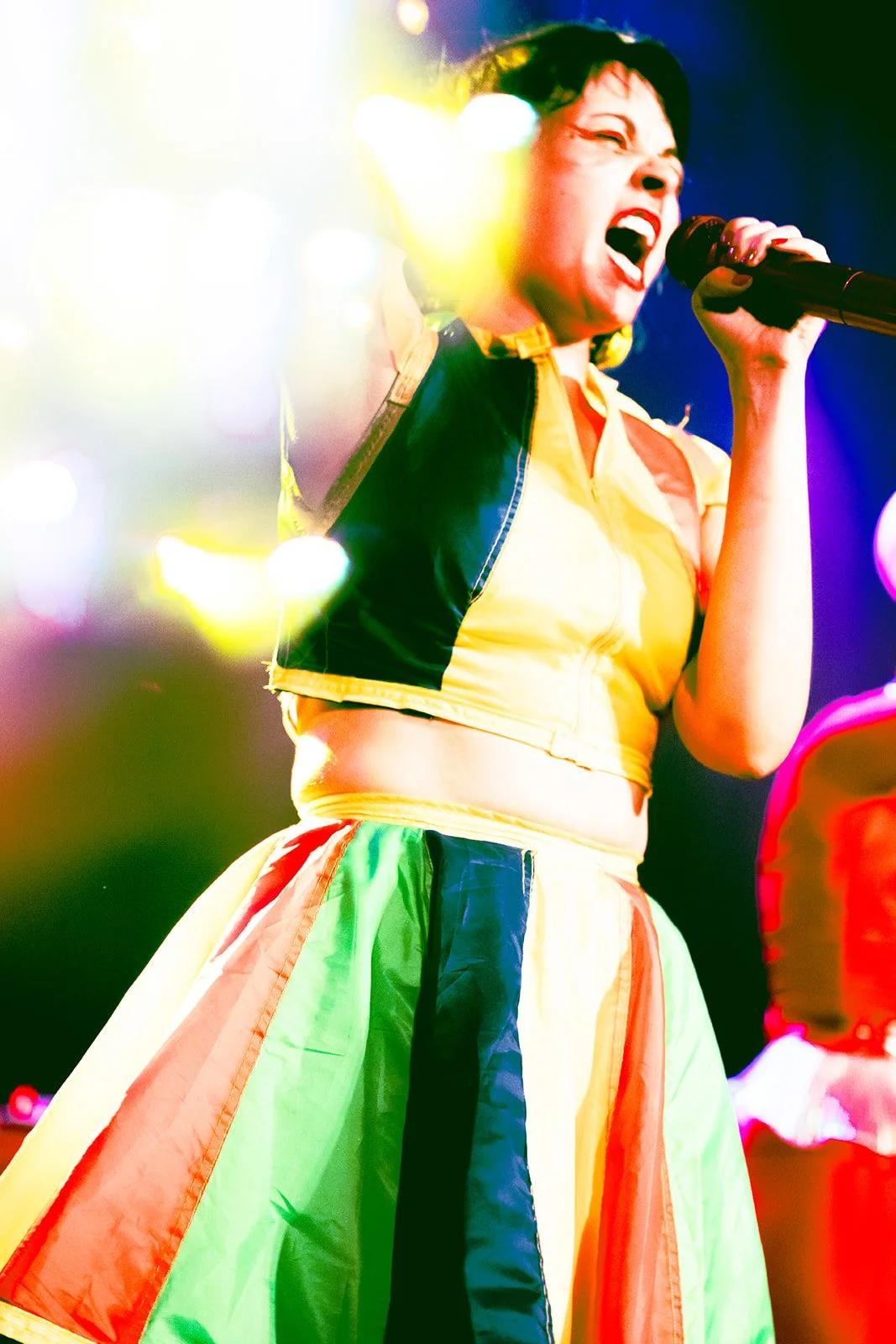
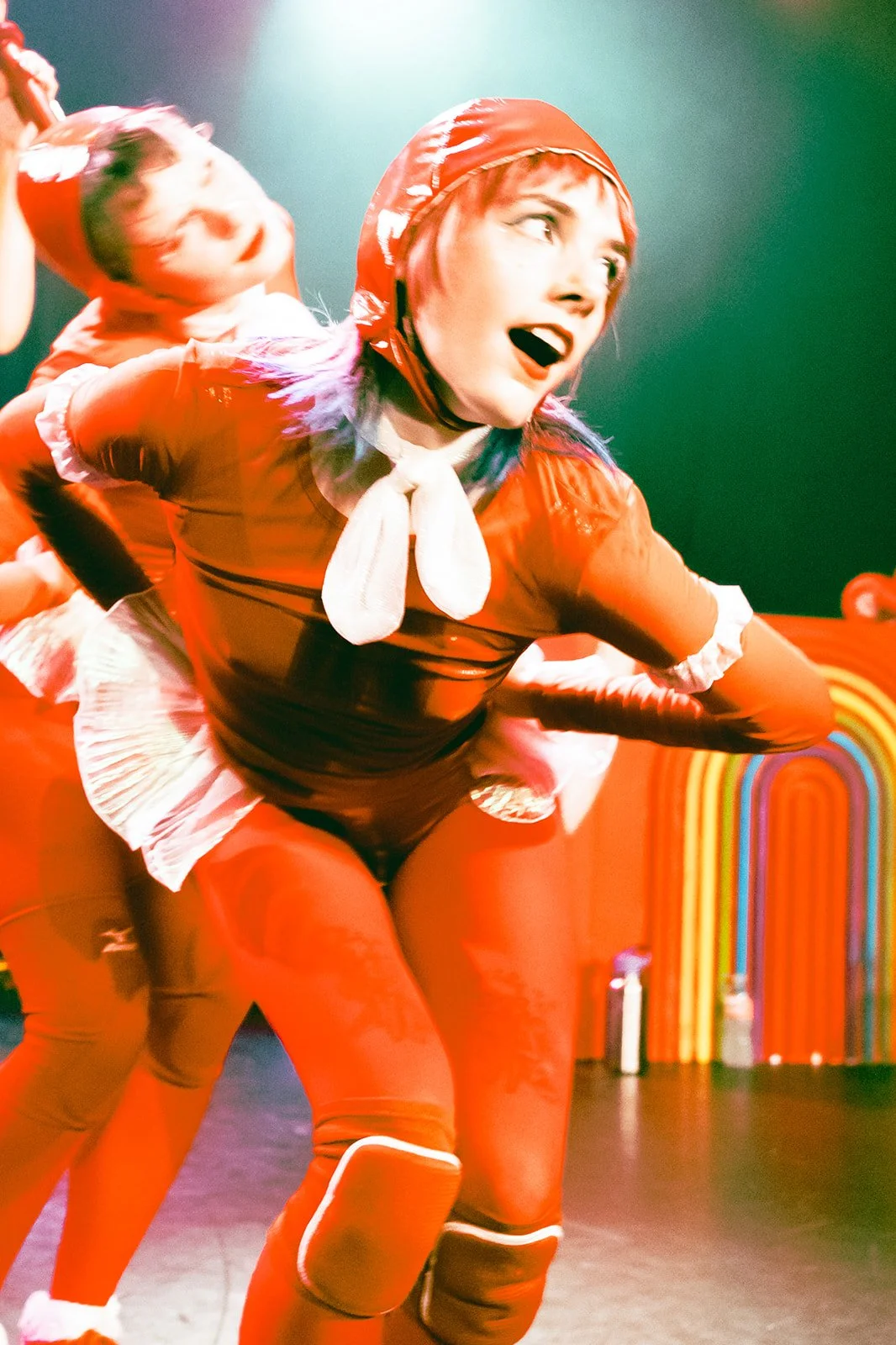
Gelli Haha, who is known to her friends and family as Angel Abaya, always performs the record in chronological order. “We’ve created a story that way,” Abaya told me later. On stage as Gelli Haha at the puppet theater, she belted and chanted, hypnotizing her audience with her song, Spit, and commanding them, or some unnamed person (perhaps herself) to “Surrender, surrender, surrender,” over and over again. In her performance of track five on the album, Piss Artist, Abaya proved herself a comic actress with the drawling, drunken delivery of a musical, makeshift monologue about party girls and jars of pee. For a lot of the show, Abaya and her backup dancers, “Gelli Company,” engaged in synchronized trampoline sequences, bouncing and dancing like parodies of a 1980s workout tape. They played carnival games, shot toy snakes out of cans and moved as one person. Also supporting Abaya were a drummer, a flautist, a “Synth Scientist” and multiple puppeteers. It seems like nothing is off the table in Gelli Haha’s world. The audience hooted and hollered, cheering them on with affection.
Not too long after their show at the iconic Marionette Theater, I found myself at Eagle Rock’s self-proclaimed Aperitivo bar, looking through its dimly lit, red-light interior for Abaya herself, or any one of her collaborators I was supposed to meet for a roundtable interview ahead of their North American tour–their most ambitious circuit yet. Waiting for my drink near the bar, I repeated each of their names and creative roles under my breath in a silent bid to soothe my nerves: there was Abaya herself, who would be accompanied that night by her producer and sometimes co-writer, Sean Guerin, Gelli Haha’s music video director, David Gutel, and Sienna Kresge, Abaya’s choreographer and one of two backup dancers. Abaya emerged from the dark wearing a trench coat fit for the night’s chill, as bold and as red as the sequined jumper she wears onstage.
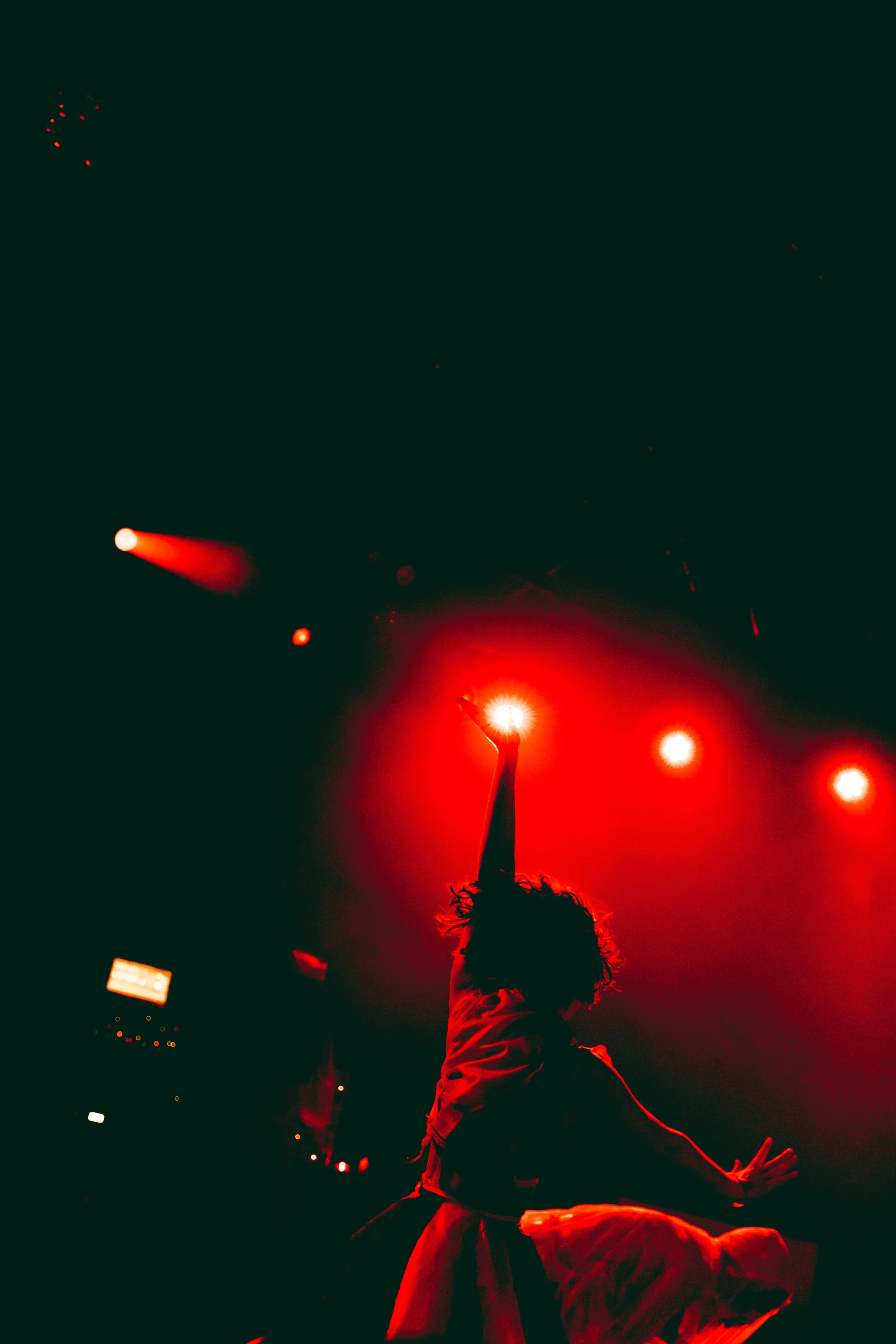
Abaya and Guerin’s story began in February of 2020, in a rural town near Boise, Idaho, where Abaya is from. Treefort festival held its first winter event that year, and Guerin’s band was in town to play a show. There at Snowfort, Abaya would meet her future collaborator, co-producer and partner, though she didn’t know it just yet. Two weeks later, the world shut down in an effort to stop a pandemic. It wasn’t until two full years later that they reconnected, when Guerin discovered Abaya was newly living in Los Angeles. They began working on what would become the first Gelli Haha record in 2023.
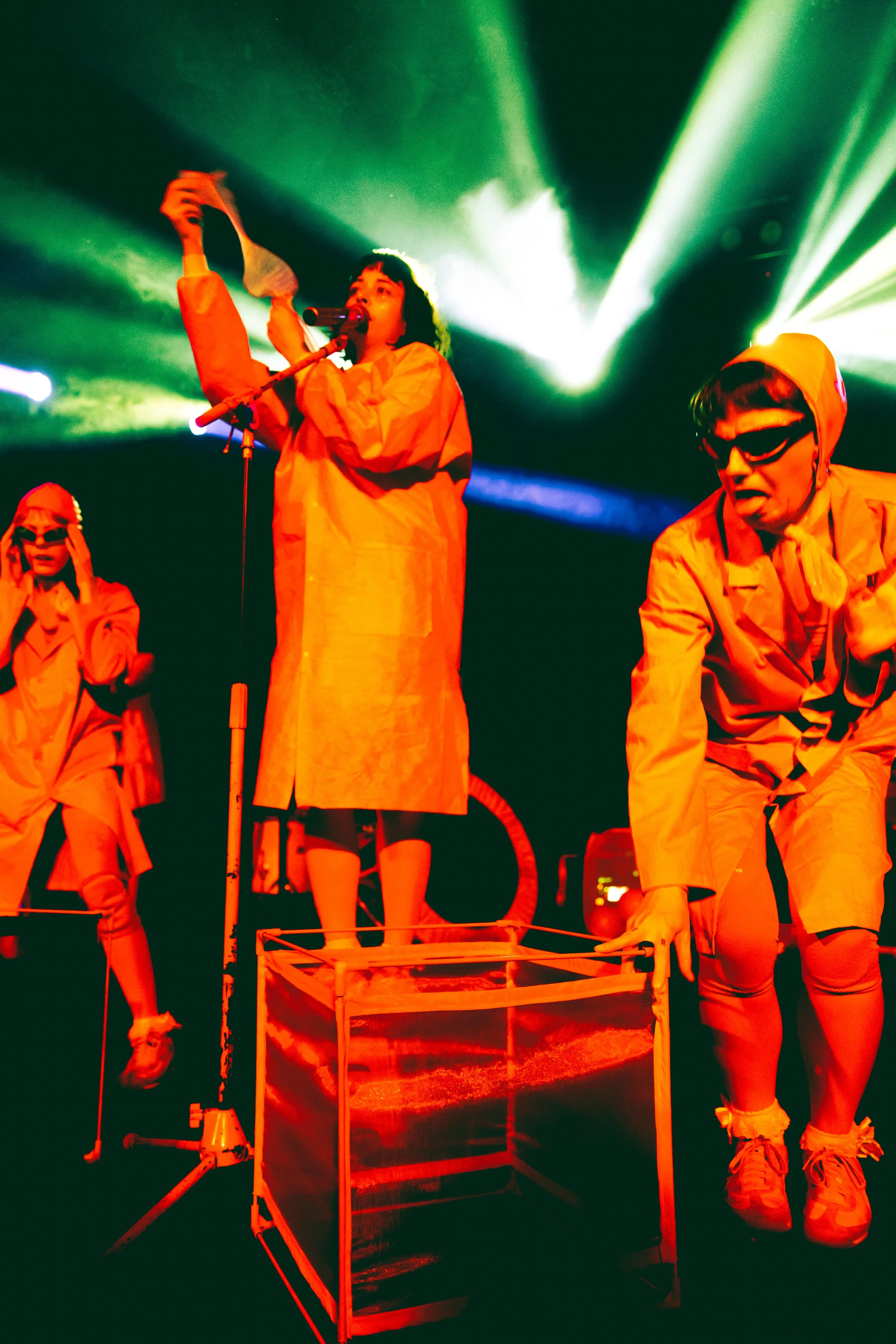
Around the same time, Kresge landed in Los Angeles, soon meeting Abaya through a mutual friend from Boise. Kresge, who was basically “assigned to be a dancer at birth,” as she put it, was experiencing a major attitude shift around her dance practice at this time. Following a two-year stint as a dancer on a cruise ship, Kresge felt burnt out by the industry. “I remember feeling like I was tired of being someone else’s monkey,” she recalled, “having to do choreography that didn’t mean anything to me.” During the pandemic, she worked to repair that relationship, and her new approach led her to choreograph Gelli Haha’s Switcharoo album for the stage–a project she found extremely creatively aligned.
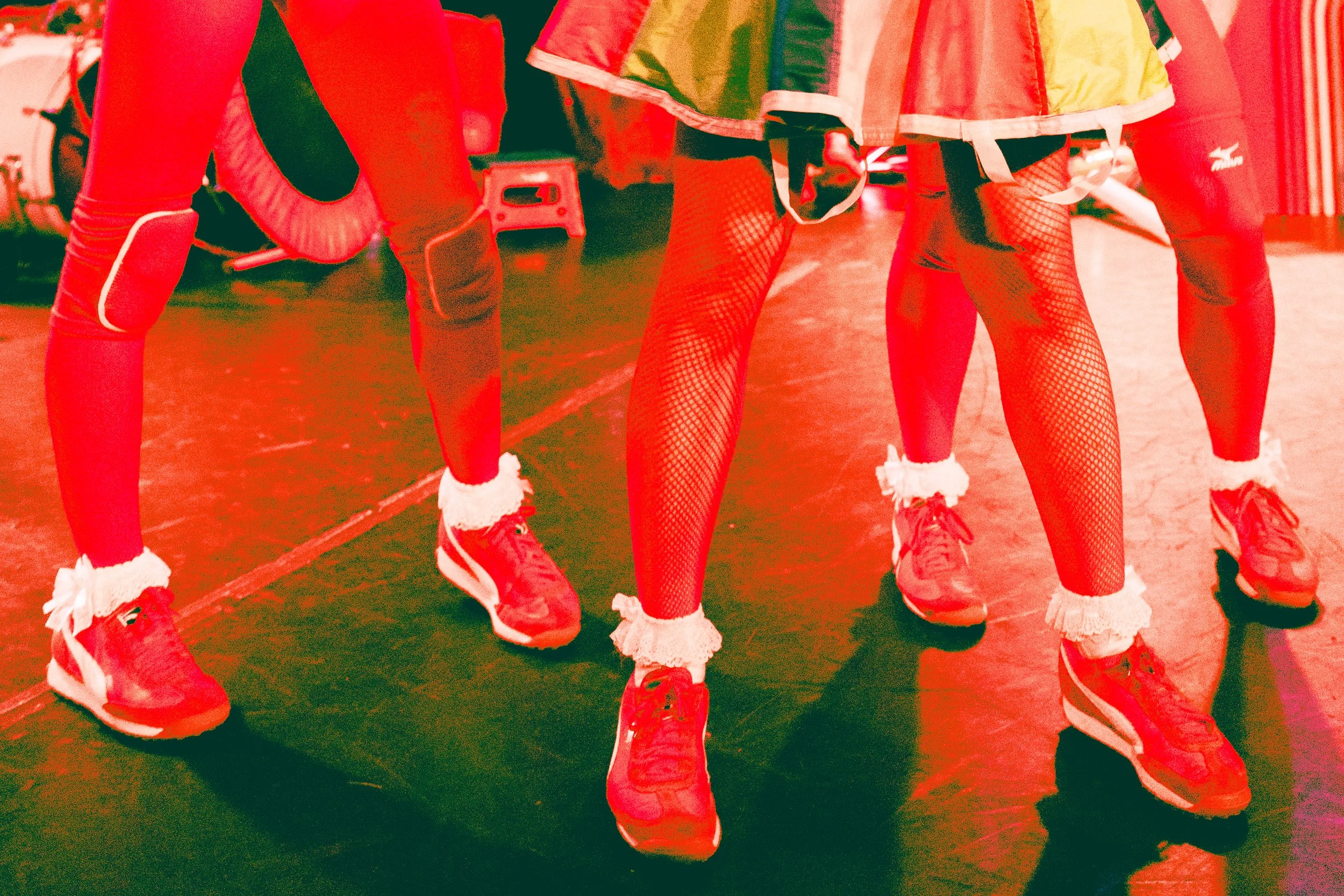
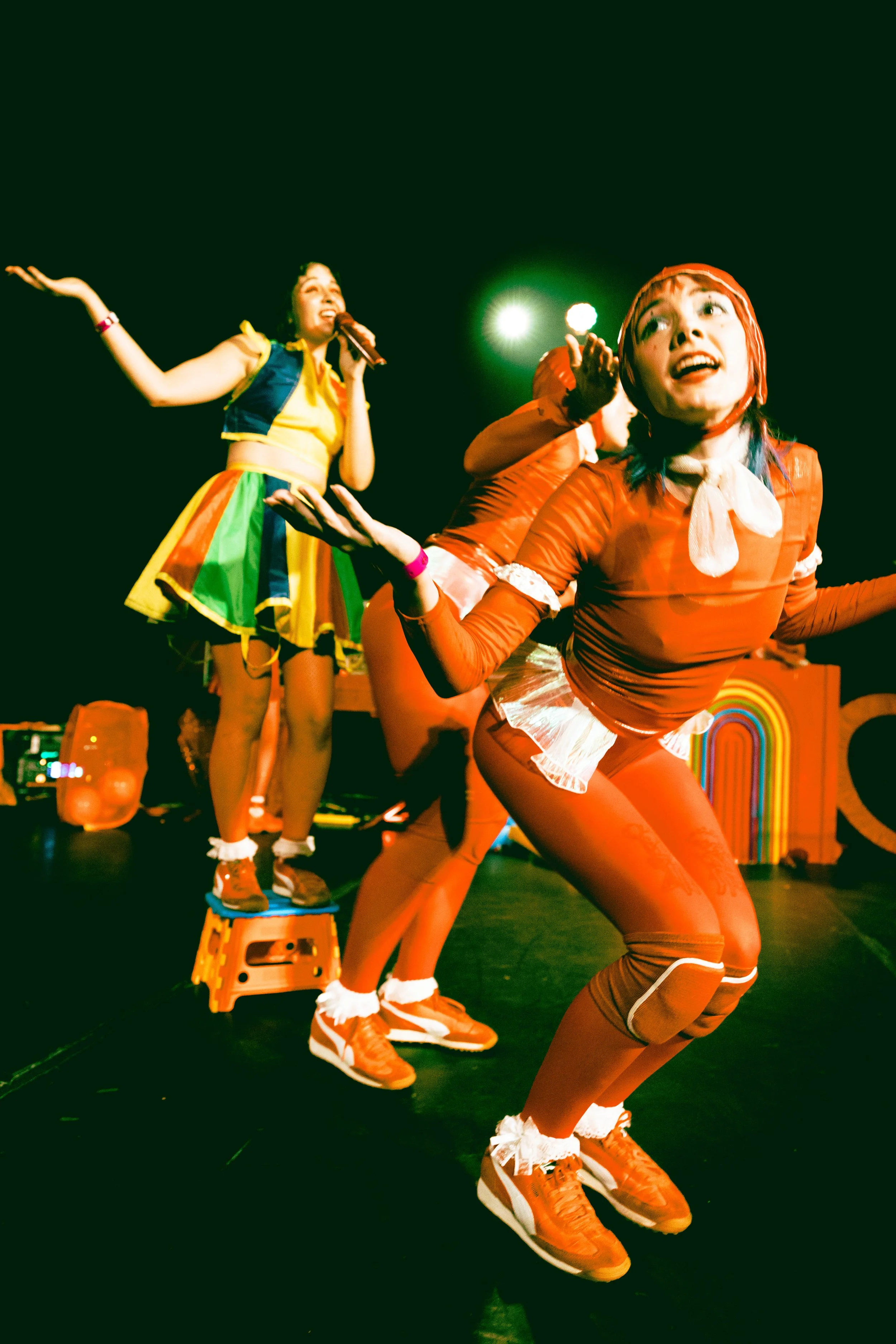
“It’s very kismet to be doing this with Gelli as a dancer and choreographer,” Kresge gushed to me, humbly noting the personal significance of performing on a nationwide tour. “So much of Gelli is bringing your inner child out. For me, choreographing and dancing is absolutely a practice in that.”
The Gelliverse is the product of a notably complex vision brought to life using glaringly cohesive elements. This uniquely involved approach can be traced back to a manifesto Abaya scribbled during a late-night brainstorming session in 2023. “I wanted to create a project where the energy was palpable and alive...” Abaya said of Gelli Haha’s origins. When creating the manifesto, she anticipated the highly collaborative mindset that would eventually become Gelli Haha’s superpower.
Each Gelli Haha production incorporates unique performance art spectacles.
“I wanted it to be a very sensory experience... to create a show that was more than just music. That was the general blueprint. From there, it has become more of a freak show playground,” Abaya laughed. The show is certainly nothing less than an avant-garde experience for the senses, what with all the colored lights, bouncing objects and vibrant synth melodies that flood the room.
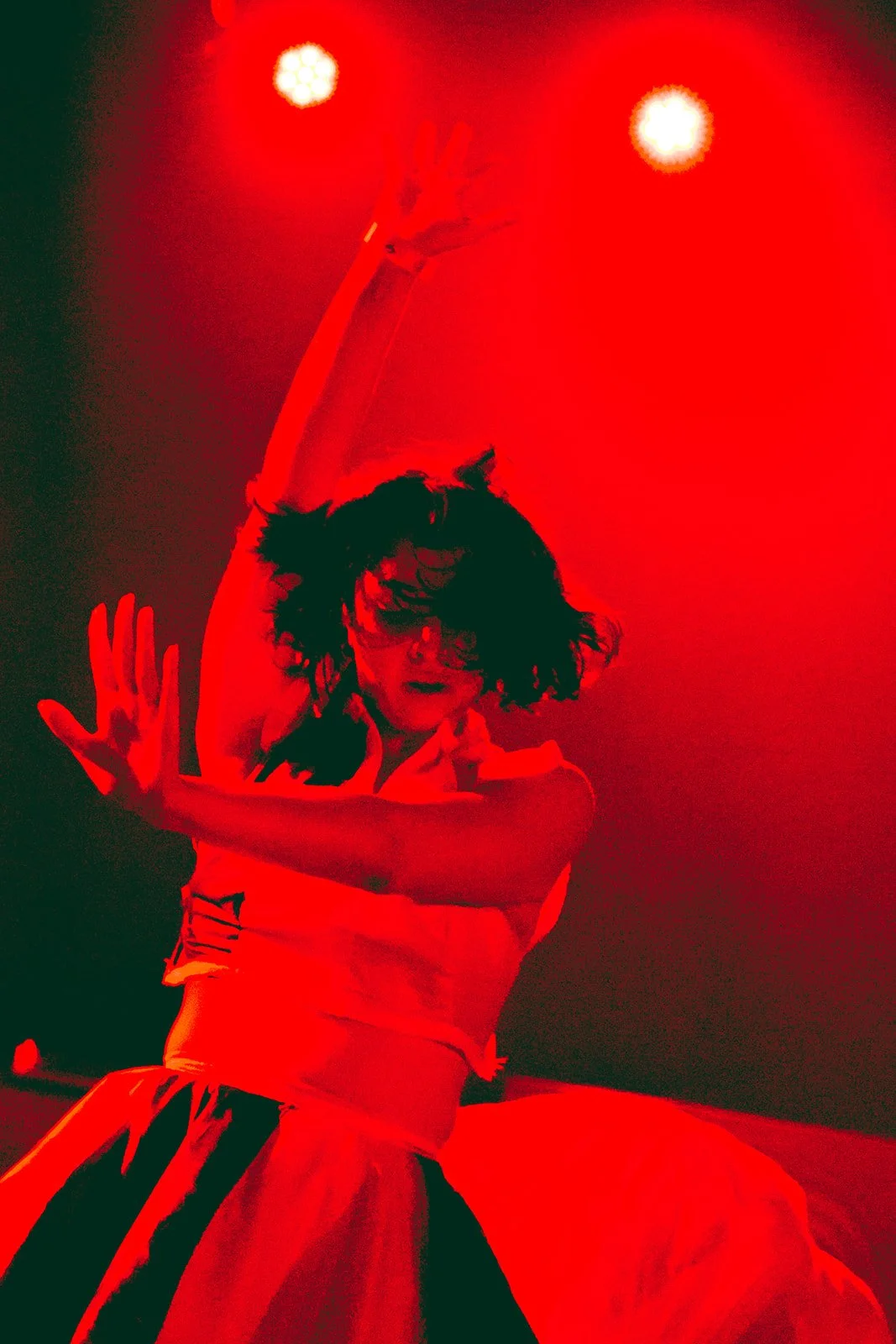
The whimsical nature of the Gelliverse manifests in every expression possible and is even reflected by Abaya’s looks offstage. “I was really inspired by the 1920s. I love Vaudeville and flapper girls. That’s why I cut my hair,” she said as she motioned to her sprightly bob. Abaya flipped her wardrobe while creating Gelli Haha, too, embodying the character by trading in her old styles for statement pieces in various shades of red. So, what came first, the music or the candy-apple-colored Gelliverse? I wondered out loud. According to Abaya, it all developed simultaneously. “This wasn’t going to be an indie band that eventually had a visual identity. Right off the bat... I wanted to do everything.”
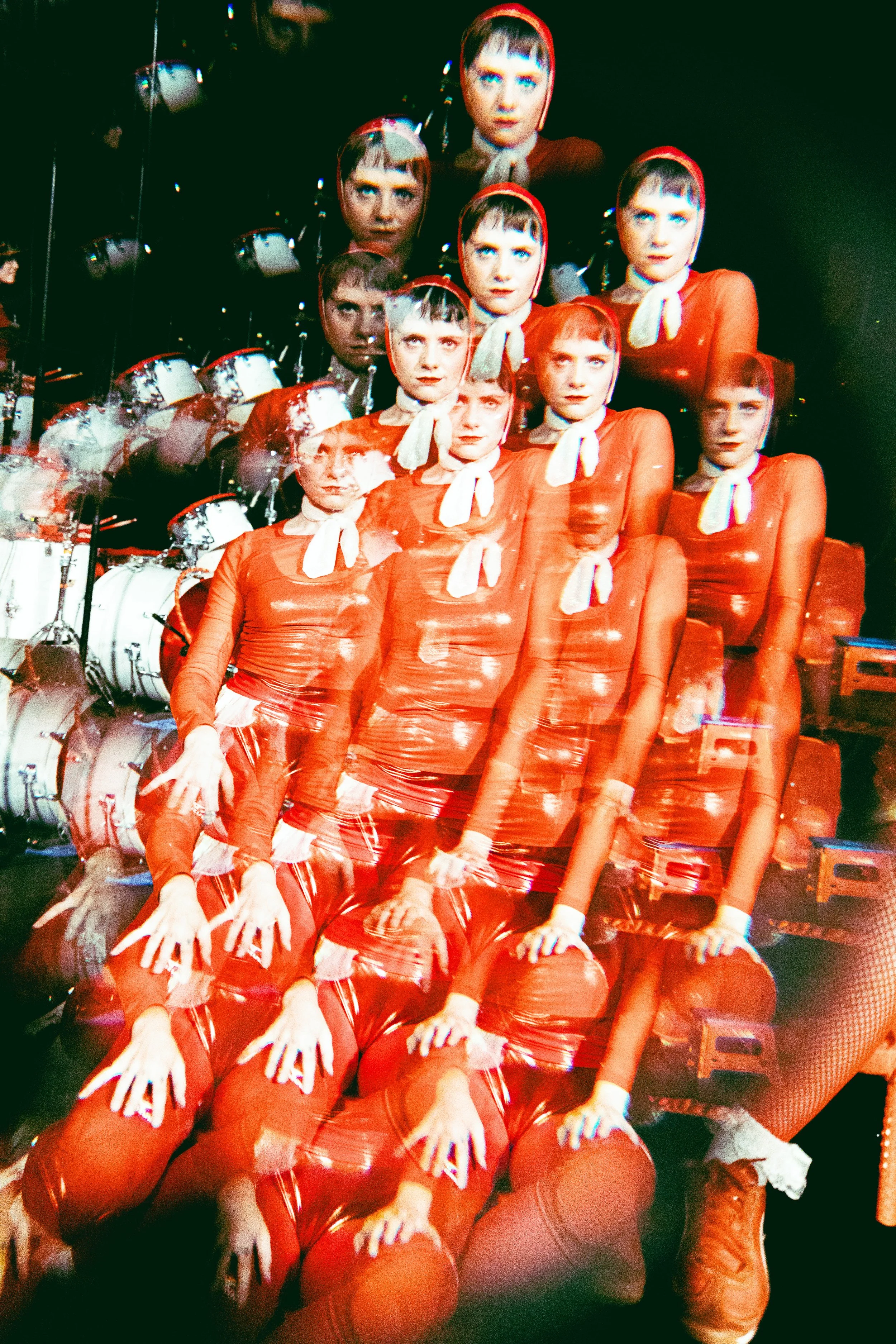
Abaya is the “Mothership” of Gelli Haha, as she calls it. She writes and co-produces the music and serves as creative director. But continuing Gelli Haha’s pattern of teamwork, Guerin has a major sonic influence over the project. Back when Switcharoo was in its earliest stages of development, he was collecting vinyl records, bringing home hidden gems and undiscovered favorites from the record store where he worked. He was especially drawn to 1980s records that barely exist online today–stuff like the elusive Evan’s Pyramid album and electric synth-funk tracks by Dizzy K. Falola, before his gospel era. One record that particularly stood out was Warp by New Musik, released in 1982. Guerin took his inspirations to heart, purchasing the same retro synths used in these records for the making of Switcharoo. Though they have likened one of the first songs they made together, Funny Music, to a “modge podge of Kate Bush and Animal Collective,” they eventually developed a unique sound by letting go of all comparisons. “We kind of freed ourselves to make whatever,” Abaya stated proudly. Today, the creative partnership continues to meticulously shape the experimental synth-pop-meets-disco sound Gelli is known for. The duo is currently working on the next Gelli Haha project, which will reveal a further evolution of sound and story. Their latest single, Klouds Will Carry Me To Sleep is “a preface, a hint” of what’s to come, according to Guerin. In Abaya’s words, “The song is the traveling piece between worlds.”
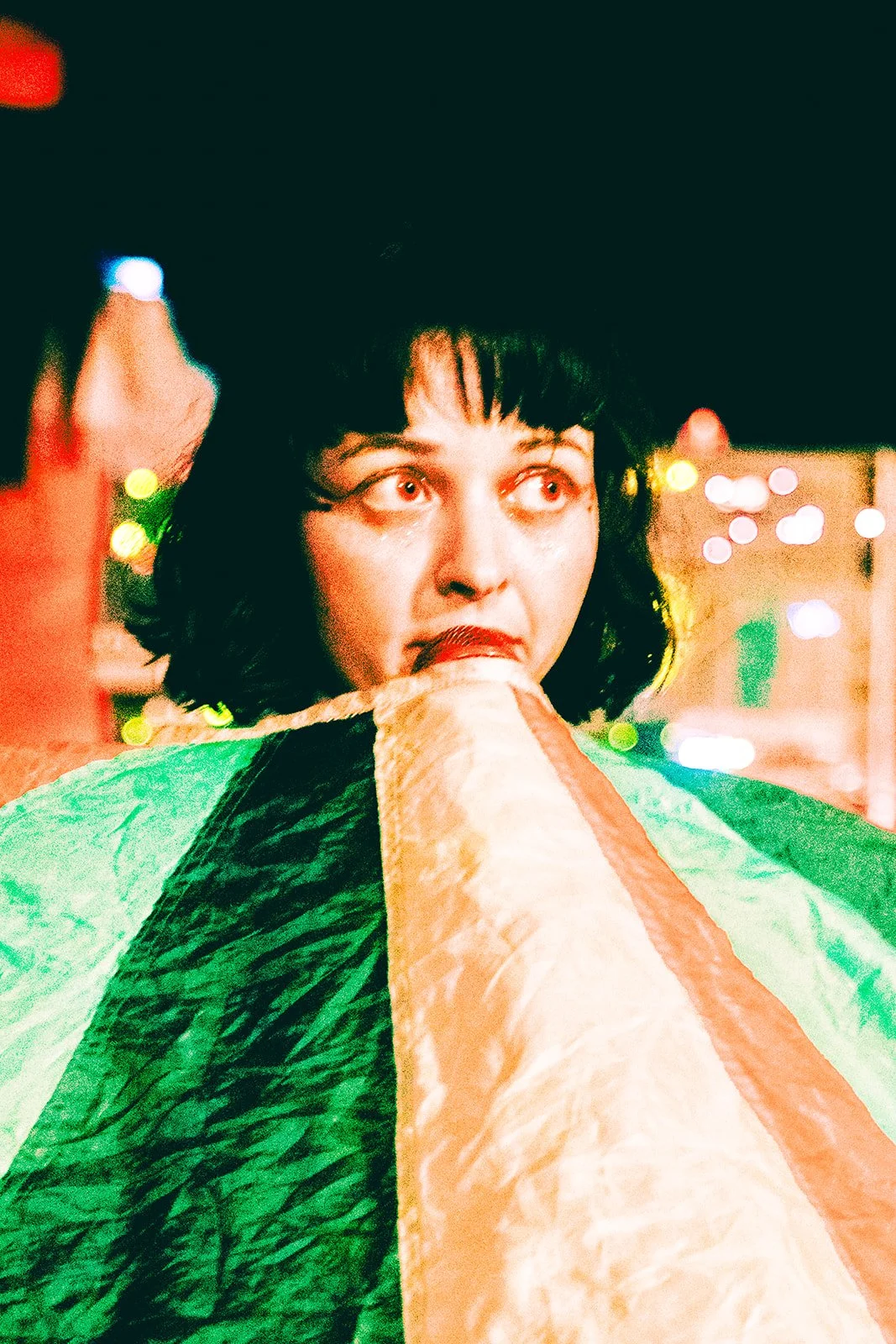
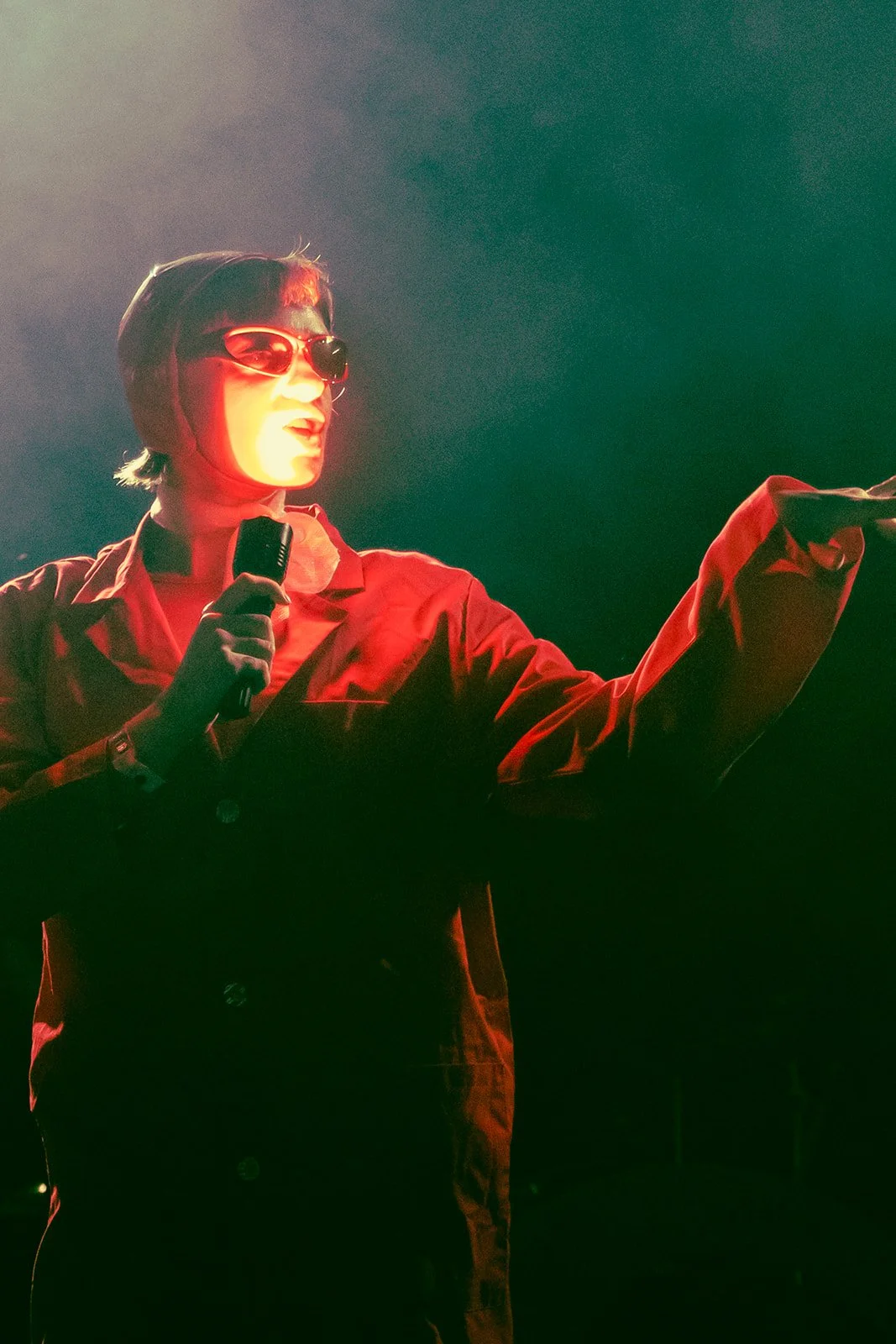
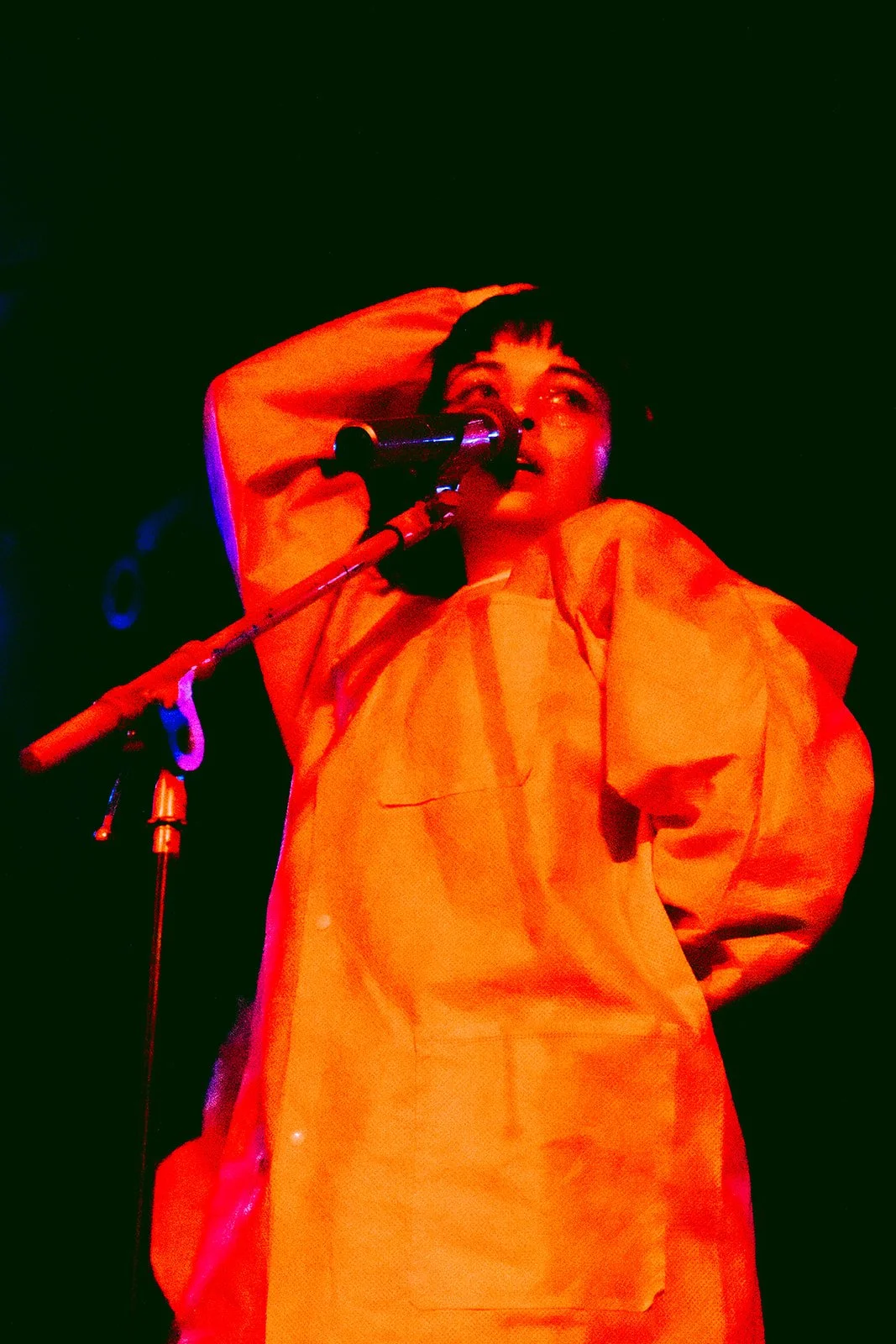

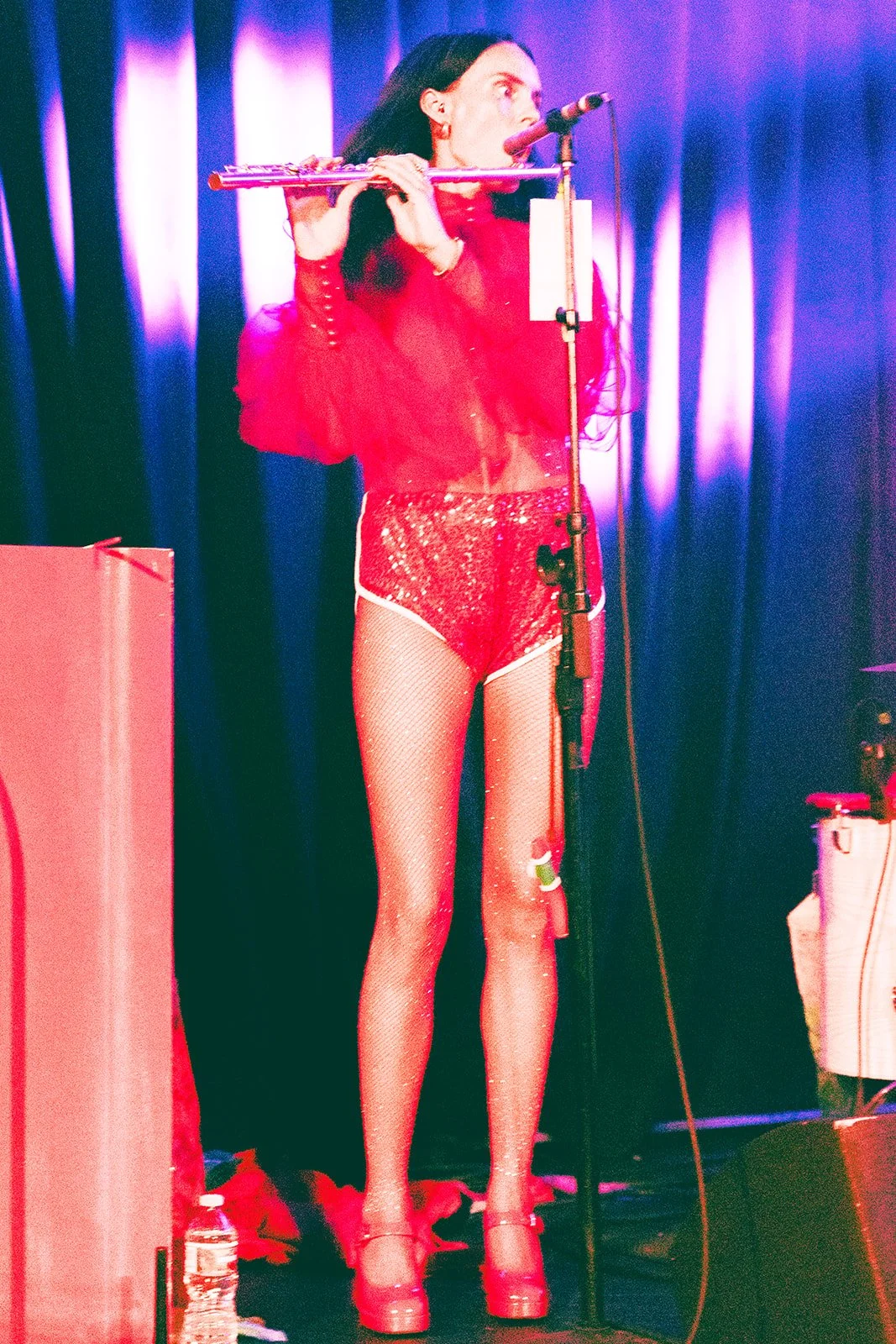
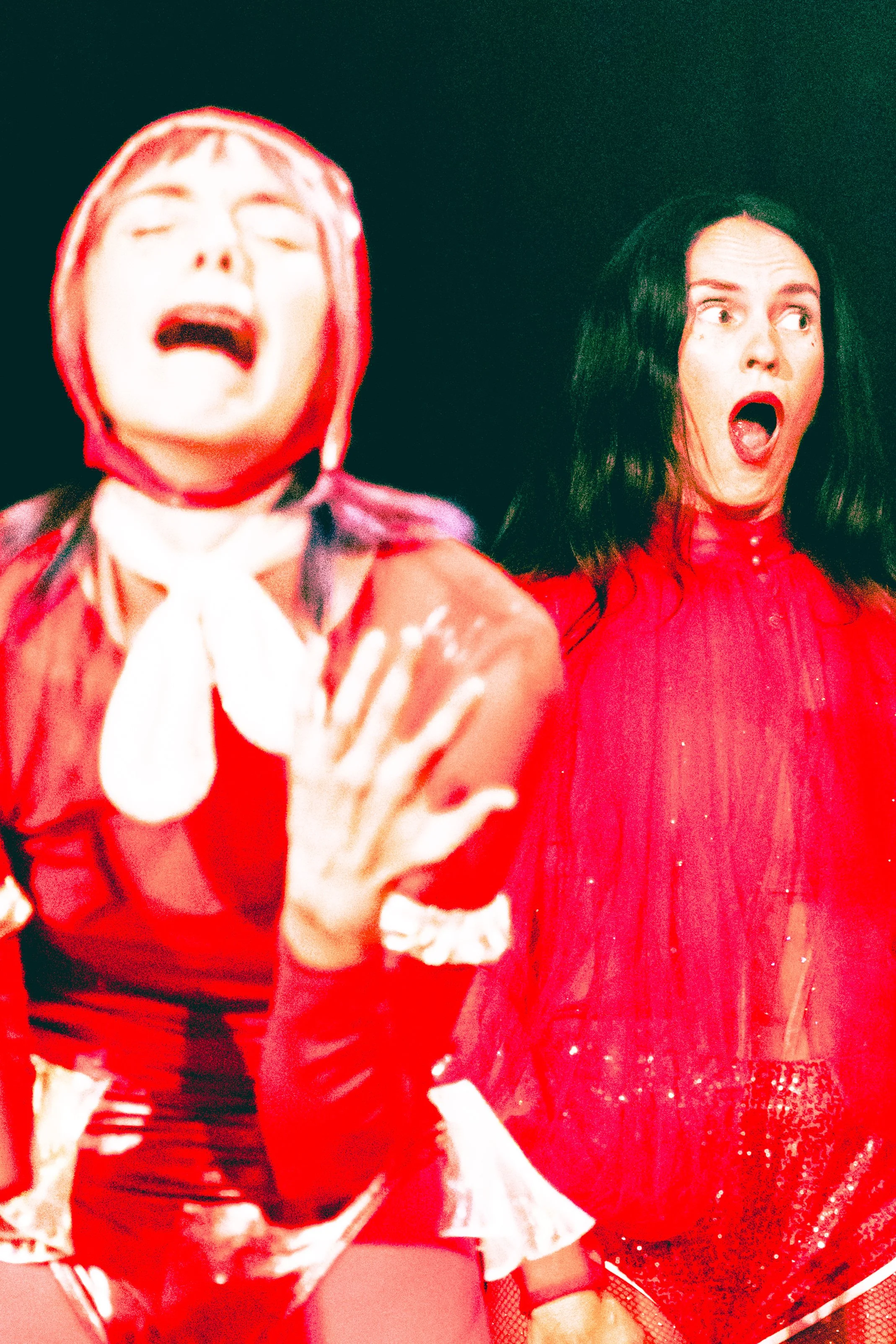
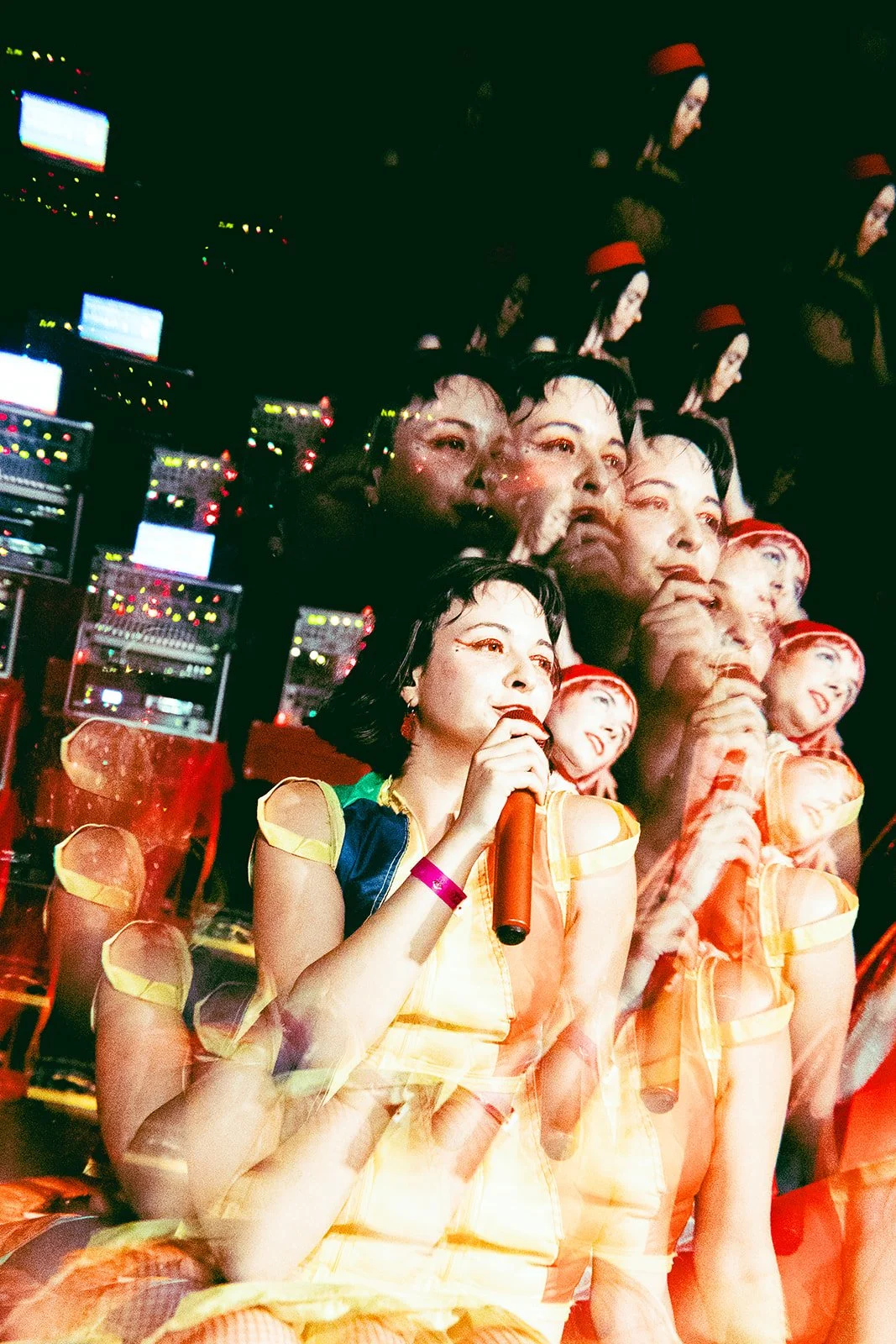
In all of Gelli Haha’s music, there are playful, unconventional moments woven throughout. Whether that be the “bonk!” at the end of Funny Music, or the sounds of children playing throughout Bounce House, there is something rebellious about the way each song seems to go wherever it wants, and about how Abaya sings whatever she wants, however she wants. Guerin described that Abaya isn’t easily affected by the pressure to sing or perform in a certain, normalized way. While recording Bounce House, “Angel was actually jumping up and down when singing into the mic…” he recalled. “I stopped listening to people and their opinions after the first song,” Abaya stated triumphantly.
Gelli Haha’s fanbase is growing rapidly thanks to much more than the music. Using aesthetic world-building to provide context for the songs she sings, Abaya’s visual presence online is as wonderfully weird, wildly outlandish and creatively innovative as the live shows. This is largely in thanks to the group’s “Fungineer” and resident music video director, David Gutel. After years spent making music videos and touring with a fellow Huntington Beach native, Ginger Root, Gutel has now transitioned into working almost exclusively with Gelli Haha and freelancing in between. Their first collaboration, the Bounce House music video, was a personal feat of creative success for Gutel. He used a 360-degree camera for the first time in his career, employing the psychedelic perspective enabled by the technology to elicit the same bouncing, floating and flying feeling in viewers that they might feel while listening to the song. Typically, Gutel likes to experiment with extinct media formats, using them in original and modern ways. When he first listened to Klouds Will Carry Me To Sleep, he was viscerally reminded of the roaring twenties. “When they filmed car scenes back then, they used rear screen projection,” he explained, sharing a glimpse of the concept for the next Gelli Haha music video. “We’re going to bring that into the twenty-first century with an LED wall.”
Through “the power of cinema,” Gutel works to create music videos that build on the narratives and expand on details set in motion by the musicians and choreographers–all on a minimal budget. “None of the Gelli Haha vision would be possible if it weren’t for the rest of the family involved.” He made sure to shout out the music video cinematographer, Taylor Leach, production designer, Taylor Nicholson and gaffer, Chase Okimura for their individual contributions to the Gelliverse. He marveled at their closeness, “We’re just a little unit now, venturing into the unpaid unknown.”
The ever-growing impact of Gelli Haha shows that it really does take a village. Abaya picked her team at the genesis of the project, and they have remained a tight-knit group since. “Some artists find their collaborators once they’re in the system. I was never in the system. I picked my collaborators and I’ve always wanted to build with people. I can’t say anything about the other way because that wasn’t my experience, but that’s how I built this,” said Abaya. Her fierce loyalty and commitment to the Gelli Haha team is evidently reflected back to Abaya by each of her collaborators. Between Guerin, Gutel and Kresge, there radiates a shared appreciation for what the Gelliverse has given each of their creative lives and careers. “Angel is Gelli,” Kresge stated, “But she’s also done a great job letting all of us claim our ownership in the project as well. That’s been really meaningful to me.”
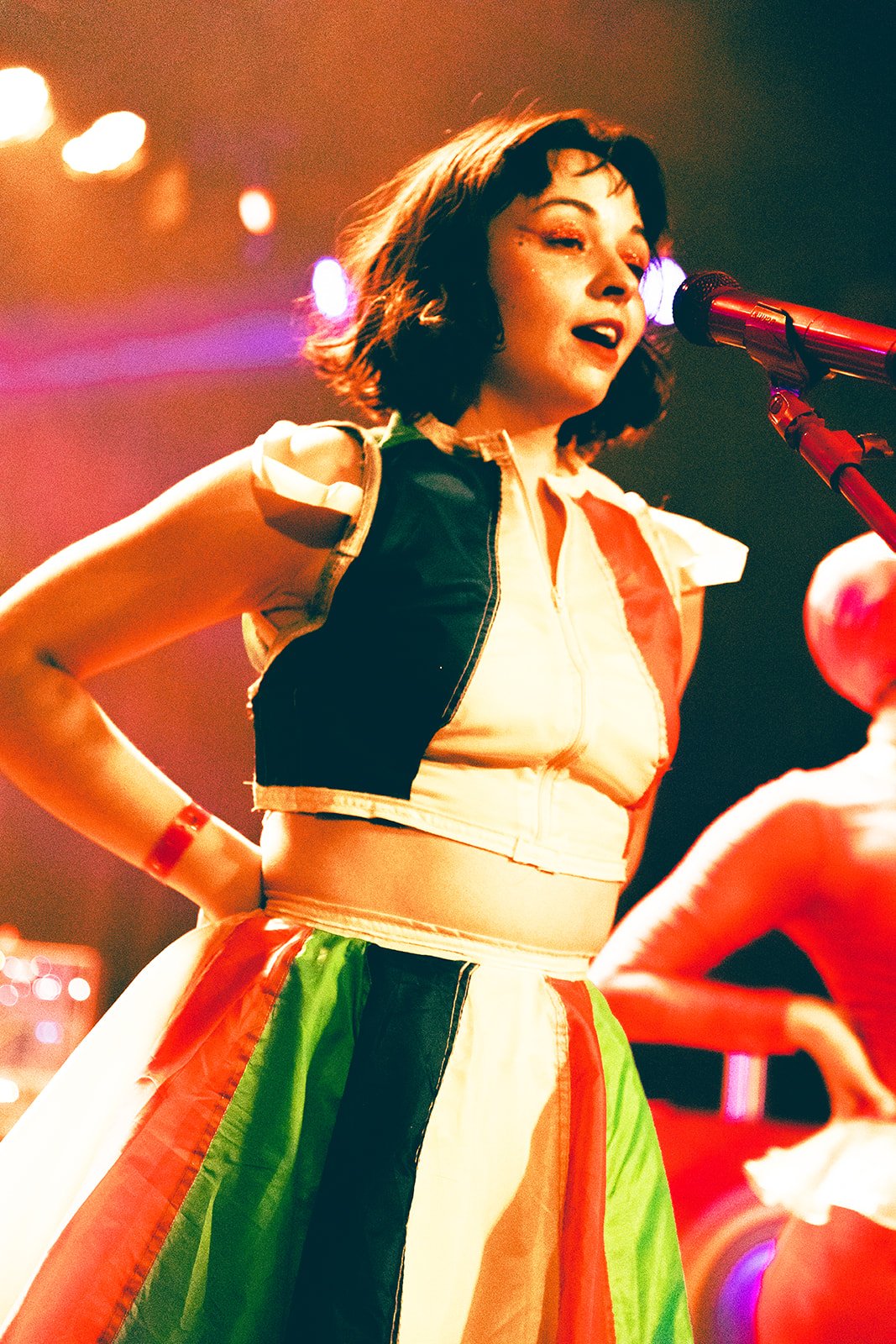
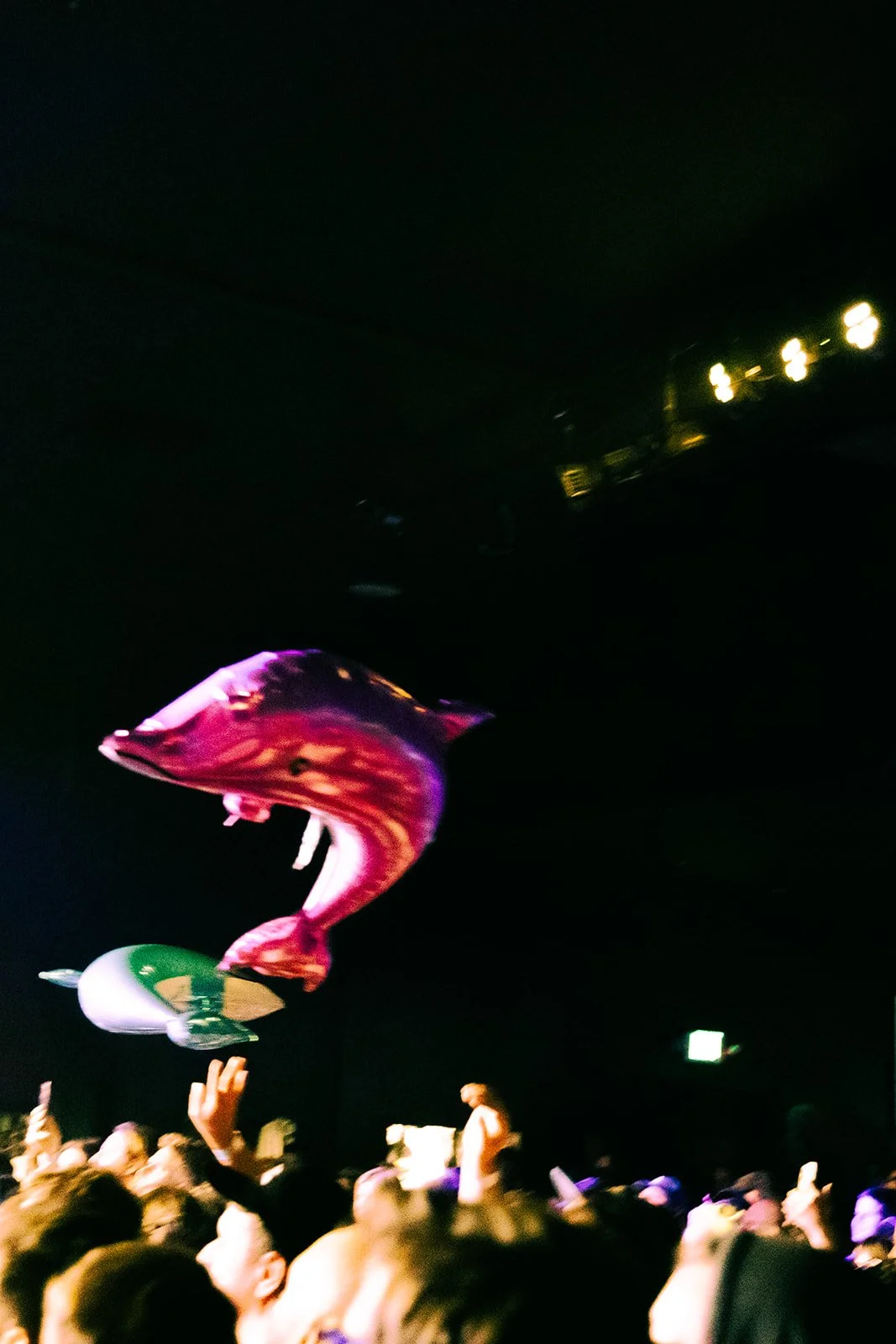
Abaya cherishes the opportunity to evolve with her friends-turned-collaborators, and they clearly feel the same. “It’s important to me that everyone feels like they are growing in the way they want to grow,” Abaya said. Whatever it is that Abaya does to inspire her collaborators to grow alongside her, it is undoubtedly working to everyone’s benefit. Just recently, Pitchfork named Klouds Will Carry Me To Sleep “Best New Track,” describing the song and music video in nothing less than astonished terms.
For the Gelli Haha family, success is only as expensive as keeping an open mind and making sincere art. Curiosity and being vulnerable, Abaya explained, is the best gift she’s gotten out of this whole thing. “I just want to keep cracking myself open and cracking open with everyone. That’s the true success of this project.”