


BLOOD sacrifice or boyfriends?
Editorial by Brooke Metayer
Two young women sit in a movie theater, sharing tissues as the blue light bouncing off the projector screen shines on their tear-stricken faces. The image is quickly interrupted when the scene jumps to moments later, after the film. The women are in the same seats, but this time donning annoyed scowls as they listen to a cliché, self-important male director participating in the film’s post-screening Q&A. “I did this personality test online and it said that I’m in the top percent of risk-takers,” he boasts with an air of performative listlessness. “Do you feel like as a filmmaker that has to do with your skate background?” the moderator asks, leaning forward in her chair. Of course he’s a skater. “I knew you were going to ask me that,” he responds. The young women recoil at the expressions of this archetypal film bro douche-bag, but suddenly, something shifts–at least for one of them. The camera moves in on his face, inspired as he says: “You can’t accept something that hasn’t been paid for. If you’re a true artist, make the voyage, move the inch, set yourself free.” She finds prophecy in idiocracy–she decides that in order to be successful filmmakers, the two women must break up with their boyfriends.
The concept of feeling as though one must lose something to gain something was fascinating to director Eve Liu and had been tailing her thoughts for quite some time before making her film Nervous Energy. “I feel like when you're young and you've found your vocation, there's a sense of ‘I have to be extreme about it. I have to make a sacrifice.’ It’s the age-old ‘everything worth having requires great sacrifices,’” she said. “I think it's sort of like proving to yourself that this thing you’ve dreamed up is for real. It’s about committing.”
Through twelve minutes of creative jump cuts, melodramatic camera zooms, hyperbolic dialogue and deranged montages, Nervous Energy puts different ideas of sacrifice to the test and, in Liu’s own frenzied way, explores the delicate balance of delusion and pragmatism necessary to reach happiness and fulfillment.
Nervous Energy was developed during Liu’s time attending New York University’s Graduate Film program. She spent her formative years moving around the globe with her parents to places like Minnesota, Australia and the United Kingdom, giving her a confusing accent and a cosmopolitan mindset. Liu knew what the rest of the world could offer her, but she wanted to make a capital “N” capital “Y” New York movie while she was living there and immersed in such a unique and bustling place. Inspired by its swarms of people and “anything can happen” promise, the movie manifested in an ode to the fast-paced ambition of the city–its glories and its undoings.
Liu would admit she has romanticized the concept of making great sacrifices for art in the past, to the point where she would fantasize about giving things up for the sake of moving the needle on just something, anything. This feeling is personified in Nervous Energy’s young heroine, Jay, as she proclaims to her friend Kiki that they must end their respective relationships. Liu said that for her, it is less about the thing that she sacrifices than it is about the act of sacrificing itself. To Jay, it is a ritualistic slaughtering for the gods in the hope that they will notice and give something in return.
Throughout history, mankind has performed sacrifice as a purifying process to remove the taint of evil and assure a desired outcome. Jay’s concept of sacrifice is akin to this biblical type–one of blood or animals or neighbors–that follows a sort of immediate “if-then” structure. If the community sacrifices, so the thinking goes, then the gods will reward them with rain for the crops. If you break up with your boyfriend, then you will be rewarded with a successful career. This form of sacrifice comes from feeling a lack of control over a situation. Grasping, the subject looks to find something that they can quickly do in order to have power over their life again, even if that power is illusory. “What are you going to do, raise three million dollars to make a feature film tomorrow? Art happens over a span of years,” said Liu rhetorically. “The only thing you can do immediately is break up with your boyfriend.” What are the village people going to do, trek to the river and bring back water bucket by bucket over the span of weeks to bring bounty to their crops? Something they can do immediately: decapitate someone in a temple.
These types of religious sacrifices were typically thought of and completed by groups of men, which lends them a masculine nature. Liu believes the nature of these historical rituals is paralleled in modern situations as well, expressing: “It feels quite masculine to give something up for art. I guess a lot of this film was me being nervous that I am not doing enough. I feel so tethered to these boys and girls in my life. Maybe I should be brutal, maybe I should give them up.”
Speedwalking through Times Square, Jay explains to Kiki why they need to release their tethers and break up with their respective boyfriends in order to earn the reward of becoming great filmmakers. “Have you ever met a successful male artist who sacrificed their cool life for a cool girl?” she asks, then tells an anecdote about a woman who received a Fulbright scholarship to study Buddhist manuscripts in Cambodia and gave it up after getting hitched and pregnant.
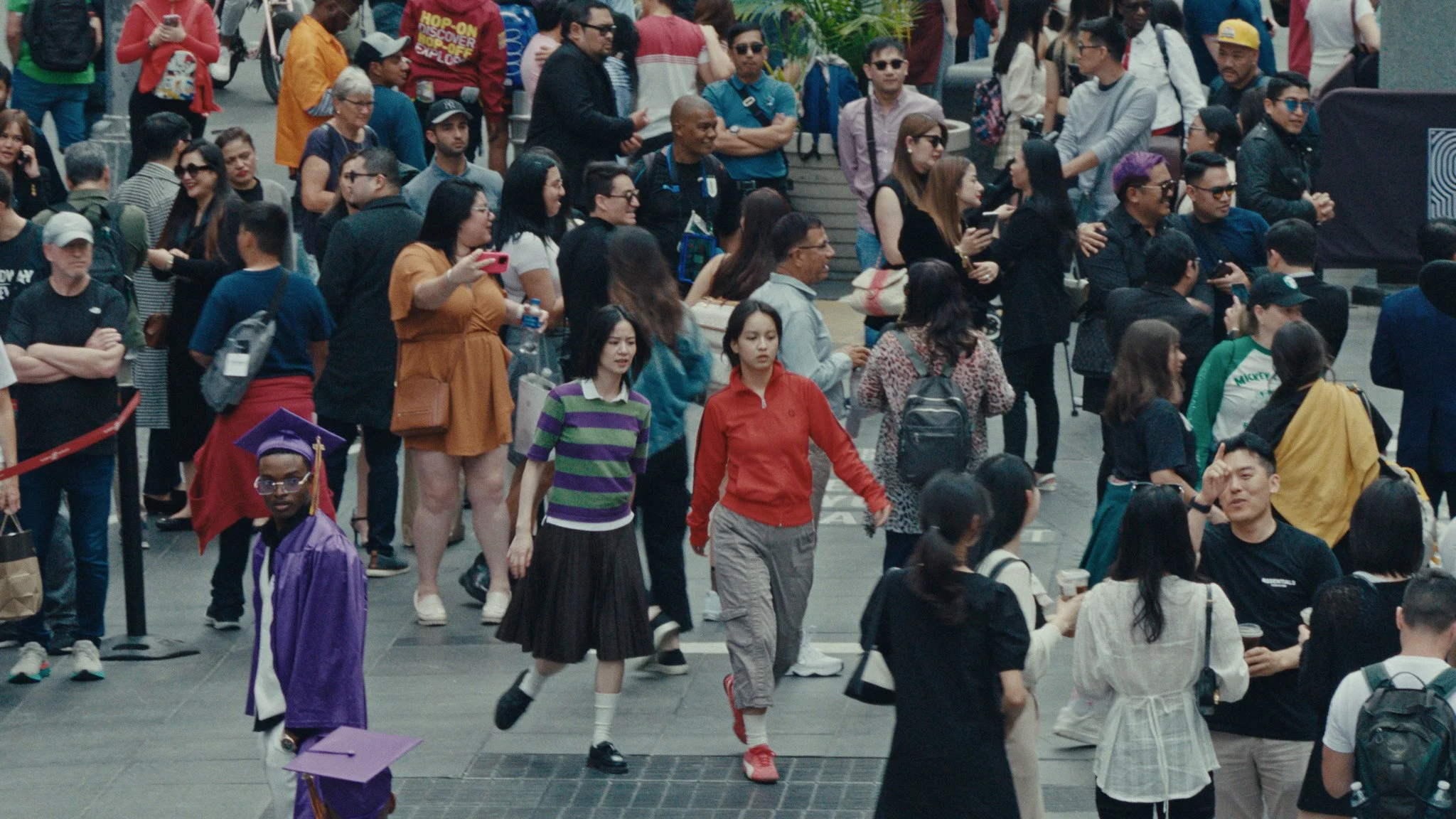

“Do you really think you’re better than me?” asks Kiki.
“YES,” Jay repeats over and over, taunting Kiki.
Liu spoke about how these conflicting values portrayed in her characters manifest in her own life–and likely many other modern young women’s lives. “One moment, I’m like, ‘Fuck guys, nobody respects us.’ Definitely I say shit like that, but then I'm still going to walk into a bar and I'm going to see a hot guy and I'm going to be like, ‘Damn, it would be so sick if he told me I was pretty.’”
As evident in even the creative approach to the film, with its action-hero movie touches and bold colors, Liu is a maximalist. Liu described herself as an Emma Bovary type, saying that the reason she turned to filmmaking as an art form was because it was the only medium encompassing enough to accurately express everything that was going on in her mind. “I like doing everything,” said Liu. “I want everything. I want to do everything that I'm ever interested in and I'm going to eat the entire plate. That's where the best stuff comes from.”
The question of whether or not women are truly able to “have it all” has been making headlines since Betty Friedan published The Feminine Mystique in 1963. Friedan argued that women were chafing against the confines of their roles as wives and mothers, sparking a second wave of feminism and a reevaluation of societal gender roles. This reevaluation encouraged women to join the workforce alongside men, opening up a whole new slew of options when it came to each woman’s personal dreams and aspirations. Sixty years later, the excitement of career options, combined with the still-standing social pressure to be a homemaker, has created inner conflict for many modern women. Headlines now read “Why Women Still Can’t Have It All” (The Atlantic) and “Executive Women and the Myth of Having it All” (The Harvard Business Review). With this dilemma in mind, Nervous Energy grapples with the legitimacy of “having it all”–friends, romance, art, money, family–with this on-screen conflict between characters. Jay is willing to give up relationships, Kiki is willing to give up her career–but which is more dignified?
By critiquing the absolute nature of the two main characters, Nervous Energy reveals Liu’s affinity for nuance. She commented on the polarization of modern social dynamics, acknowledging with ironic sincerity the expectations of a certain type of feminist social commentary when making a movie about women in film: “I think people like to take stances so immediately. I was thinking a lot about that when I was, you know, writing my ‘female filmmaker’ movie.” She knows the audience wants her to take a moral stance–to support or condemn one character or another, but she refuses. “In reality, people are complicated,” said Liu. “I'm not interested in like feminist cinema or Asian American cinema, I just want good movies with real characters who are authentically human.”
Neither Jay nor Kiki are “right” or “wrong,” or even realistic, but rather, they embody two different extreme reactions to the dilemma of finding personal fulfillment within modern social order. In this case, perhaps, the women’s perspectives aren’t so different after all. Kiki considers sacrificing her art practice to fulfill a likely more practical life role as wife and mother, while Jay rejects this tradition and instead decides to chase a life of prestige. Kiki sees power in love, Jay sees love in power. Although it feels absolute, both women perform the brave act of sacrifice in order to uphold their respective values.
After their Times Square manifesto, the women split off, running in slow-motion, like action movie heroes from an explosion, on their way to break the bad news to their lovers. A fantastical narrator dictates the stakes: “This is a story about two young artists, or rather, two young women moving towards a life of art…On the cusp of success/failure, Jay and Kiki need to make a bold decision with their lives for once.” Jay, more emboldened toward this masculine, biblical type of sacrifice, successfully breaks it off with her man–even throwing in a face slap for dramatic effect. Kiki reveals an affinity for the aforementioned traditional, feminine form of sacrifice. She does not break up with her lover and instead opts to preserve her romantic relationship and the stability that comes with it.
Post-confrontations, the women sit across from each other at a restaurant table, sipping on sake. Kiki explains why she couldn’t break it off with her boyfriend, Keisuke: “Beauty is the only thing that doesn’t require a decision for me,” says Kiki. “Everything that is good in life is beautiful.” With this observation, Kiki reveals how she values beauty the way Jay values innovation. She believes there is strength in romance and comfort, the same way Jay believes there is strength in action and creativity.
Liu places these two friends with polarizing perspectives across the table from one another as she antagonizes the film’s central question: "Is it possible to have love and power at the same time?" Their conversation turns into an explosive fight and sipping sake turns to chugging as Jay and Kiki defend their positions and criticize the other’s. Kiki is disappointing, Jay is self-righteous.
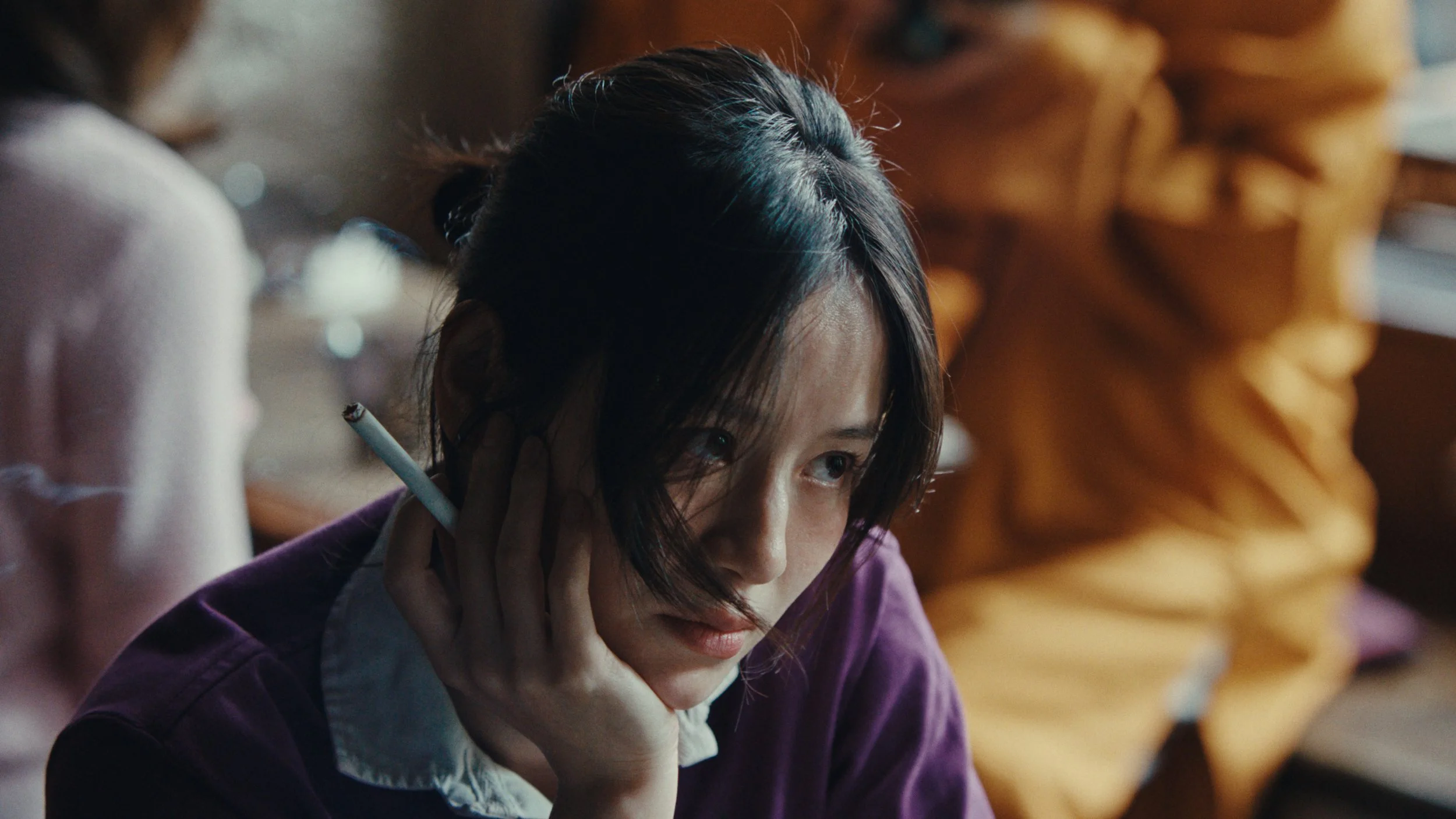
Throughout the film, Liu is interested in how seemingly opposite things relate to one another. She comments on how she finds beauty in patheticness, harmony in chaos and empowerment in disempowerment. “I'm always of the belief that things on opposite sides of the spectrum are a lot more similar than things that are adjacent to one another,” said Liu. “There is so much life and humor and possibility when you realize that seemingly opposing things are, in some ways, always enamored with one another. Imagination and reality, the East and the West, beauty and power, life and death; in their encounter, something transforms, exchanges, spars.” In being each other's foils, Jay and Kiki provoke the extremes of each other's natures with such force that it blows generations' worth of dust off of the audience’s unchallenged value systems.
When asked what she wants audiences to take away from watching Nervous Energy, Liu said: “I want people to go out and get a drink with their friends.” While at first seeming contrary to the themes of the film, given that Jay and Kiki’s sake-sipping went so existentially south, it makes sense that Liu wants the audience to see the value in this “unambitious” yet deeply fulfilling type of happiness. In a city like New York, where it seems like many people will both metaphorically and physically shoulder-check another into a hot dog cart to get where they are going, Jays and Kikis run amok, taking many shapes and forms–always in their own world, never compromising. Perhaps the antidote to the never-ending existential crises is simply spending time outside of the ego, connecting with loved ones, for this is what leads to true on-your-death-bed satisfaction. With these words, Liu makes an argument for surrendering to the abundance of the present, instead of worrying about the future.
In the words of philosopher Georgij Ivanovič Gurdžiev, “Sacrifice is necessary, but if there is anything in the world that people do not understand, it is the idea of sacrifice. They think they have to sacrifice something that they have. In actual fact, they have to sacrifice only what they imagine they have and which in reality they do not have.”
Published 5.8.26